


Turning a Lifetime of Medical Needs Into Evidence a Jury Can Trust
Key Takeaways: Proving future medical costs in a West Virginia injury lawsuit generally requires testimony offered to a reasonable degree of medical certainty, not general predictions of indefinite care. Because past bills are often the smallest part of a catastrophic claim, lifetime value often rests on a life care plan tying every projected service, frequency, and unit cost to a specific physician recommendation, with an economist reducing the total to present value. West Virginia distinguishes economic from noneconomic damages, and juries are commonly asked to award future damages only where evidence supports both an amount and a defined period of need. Separate rules, including West Virginia’s several-liability statute, W. Va. Code § 55-7-13c, the common-law collateral source rule, and the Medical Professional Liability Act, may further shape how damages are presented, allocated, and adjusted. Coordinated expert testimony across treating physicians, planners, vocational evaluators, and economists often withstands defense attacks, while third-party liability and policy limits can determine whether a projection may actually be funded. The two-year statute of limitations under W. Va. Code § 55-2-12 generally leaves little room for delay.
Proving future medical costs in a West Virginia injury lawsuit requires far more than a doctor saying you will "need care for a long time." Courts expect projections supported by qualified testimony, documented treatment history, and a defined time horizon. For someone living with a spinal cord injury, traumatic brain injury, or amputation after a mining, drilling, or construction incident near Morgantown, that evidentiary burden can determine whether a verdict covers decades of surgeries, therapy, equipment, and attendant care.
Building that proof begins long before trial. If you or a family member suffered a catastrophic injury, Robinette Legal Group PLLC can evaluate how your future care needs should be documented and presented. Call 304-501-5753 or reach out to our team now to discuss your situation.
Why Future Medical Damages Are the Heart of Catastrophic Injury Damages
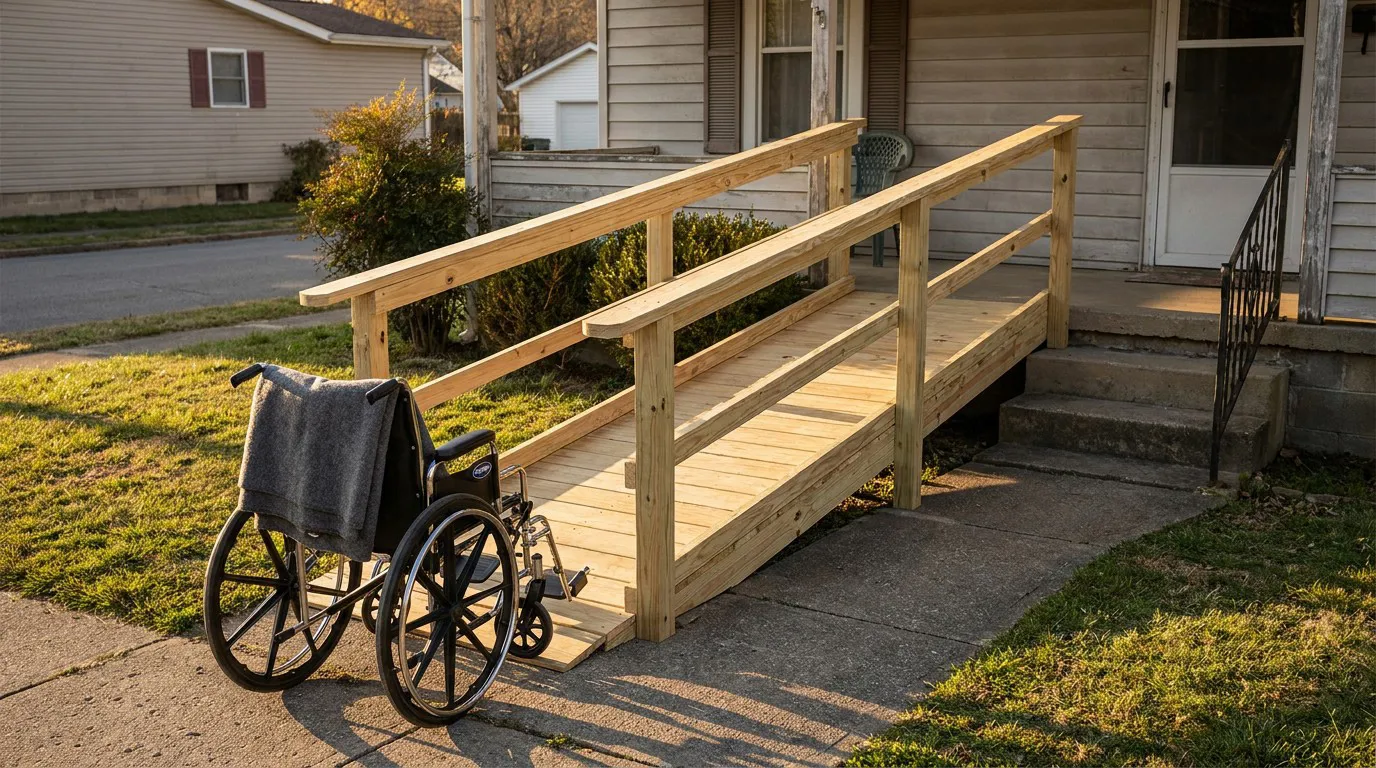
In a life-altering injury case, past medical bills are often the smallest part of the claim. A worker paralyzed in a roof collapse may accumulate a few hundred thousand dollars in emergency and acute care, then face decades of wheelchair replacements, pressure-sore treatment, urological care, home modifications, and in-home nursing. The lifetime figure frequently dwarfs everything already spent.
West Virginia practice distinguishes economic from noneconomic losses. Under Chapter 55, Article 7 on actions for injuries, economic damages generally include medical expenses and lost earning capacity, while noneconomic damages address pain, suffering, and diminished quality of life. Future medical costs must generally be proven with different evidence than the human toll of the injury, and juries often consider them separately on the verdict form.
Families often underestimate what may be recoverable, including prosthetic replacement cycles, adaptive vehicles, medication regimens, psychological counseling, and case management, depending on the medical evidence and facts of the case.
The Reasonable Medical Certainty Standard
Speculation does not survive cross-examination. West Virginia courts generally require that projected treatment costs be probable rather than merely possible. A physician who testifies that a client "might someday" need a spinal fusion provides weaker support than one who explains the natural progression of the injury and expected timing of intervention.
This standard applies to each individual component of the claim. Defense counsel routinely attacks projections item by item, challenging replacement intervals, therapy frequency, and causal relation to the incident versus a pre-existing condition. Careful documentation of your baseline health before the injury may blunt that attack.
Common Challenges Plaintiffs Face
- Gaps in treatment that defense experts characterize as evidence of recovery
- Reliance on a single treating physician who lacks time to prepare thorough projections
- Failure to account for inflation, medical cost trends, or geographic pricing in north-central West Virginia
- Life expectancy disputes, particularly where the injury itself affects longevity
- Missing records from out-of-state referral centers used by many Morgantown-area patients
💡 Pro Tip: Keep a simple treatment journal noting every appointment, medication change, equipment failure, and missed workday. Contemporaneous records often prove more persuasive than reconstructed testimony years later.
How a Life Care Plan Future Medical Costs Analysis Is Built
A life care plan is often the primary vehicle for presenting future medical needs to a jury. A qualified life care planner, often a rehabilitation nurse or physician, reviews the medical record, interviews the injured person and family, consults treating providers, and produces an itemized schedule of anticipated services with frequencies, durations, and unit costs. An economist then reduces those figures to present value and accounts for projected cost growth.
The plan’s credibility depends on its foundation, not its length. Plans that list services without tying each item to a physician’s recommendation may be vulnerable under Rule 702 and West Virginia’s expert admissibility standards. Strong plans cross-reference specific medical opinions for every line item, making coordination between the medical expert witness and the planner essential. For more, see our discussion of what a life care plan involves.
| Element of the Plan | What It Establishes | Typical Source |
|---|---|---|
| Diagnosis and prognosis | Causation and permanence | Treating physician |
| Service frequency and duration | Time period of future need | Physician and planner |
| Unit costs | Dollar value of projected treatment costs | Regional cost research |
| Life expectancy | Total years of care | Physician or actuarial data |
| Present value | Award amount in today’s dollars | Forensic economist |
These plans are generally living documents. As a client’s condition evolves through litigation, the plan may need updating, and courts may permit supplementation subject to scheduling orders and disclosure deadlines.
Statutory Rules That Shape Your Future Damages Evidence
West Virginia law affects both what future damages may be awarded and what may ultimately be collected. Under W. Va. Code § 55-7-13c, liability for compensatory damages is generally several rather than joint, so each defendant is typically responsible only for its allocated share of fault, subject to limited exceptions like conspiracy and post-judgment reallocation of uncollectible amounts. A well-supported future damages figure and realistic assessment of each defendant’s share are both necessary. Separately, in medical professional liability actions, W. Va. Code § 55-7B-6a addresses access to medical records, and both an amount and a defined duration of need should be supported by evidence when presenting future damages claims.
Collateral source principles may also affect presentation of medical damages. In ordinary negligence cases, West Virginia’s common-law collateral source rule generally bars reducing damages by, or introducing evidence of, payments from sources like health insurance. In medical professional liability actions, W. Va. Code § 55-7B-9a modifies that rule and permits certain collateral source evidence and post-verdict adjustments. Application is fact-dependent and frequently contested.
Medical liability claims carry their own overlay. Where an injury arises from alleged malpractice, W. Va. Code § 55-7B-4 sets forth limitation periods, pre-suit notice and certificate of merit requirements apply under § 55-7B-6, and § 55-7B-8 caps noneconomic damages at inflation-adjusted amounts while leaving economic damages like future medical care uncapped. These rules can change both strategy and valuation.
Deadlines That Can Foreclose the Claim Entirely
West Virginia generally applies a two-year statute of limitations to personal injury actions. W. Va. Code § 55-2-12 provides that a personal action for injury to the person must generally be brought within two years after the right to bring it accrued. Missing that window commonly bars the claim regardless of how compelling the future medical evidence would have been.
Discovery rules and tolling doctrines exist, but courts often interpret them narrowly. The accrual date may sometimes be affected by when an injury reasonably could have been discovered, and different rules can apply to minors, persons under a disability, or governmental entities. Administrative processes like workers’ compensation are separate from civil lawsuits and follow their own deadlines.
Coordinating Expert Testimony on Future Care
No single witness carries the entire burden. A well-supported claim usually integrates a treating physician on causation and prognosis, a physiatrist or surgeon on anticipated procedures, a life care planner on service scheduling, a vocational evaluator on diminished earning capacity, and an economist on present value. Each generally must remain within their qualifications, since opinions beyond a witness’s competence may be excluded.
Consistency across witnesses is what defense counsel often probes hardest. If the planner assumes weekly therapy and the physician testifies to monthly visits, the discrepancy may undermine the entire projection. Careful pretrial preparation keeps expert testimony internally coherent.
Where Third-Party Liability Changes the Picture
Workers injured in heavy industry often face compensation ceilings that don’t reflect their lifetime needs. Workers’ compensation benefits are limited, and recovering beyond them generally requires proof of a third party’s negligence or satisfaction of West Virginia’s demanding deliberate intent standard under W. Va. Code § 23-4-2 against an employer. Any third-party recovery may also be subject to statutory or contractual subrogation rights. Our overview of West Virginia work injury resources addresses how these claims are evaluated.
Policy limits are a practical constraint families rarely anticipate. Even a well-documented multimillion-dollar life care plan may exceed the at-fault party’s available coverage. Identifying additional sources, contractor and subcontractor policies, equipment manufacturers, premises owners, umbrella coverage, and underinsured motorist benefits in vehicle cases, often determines whether a projection may actually be funded.
💡 Pro Tip: Preserve equipment, defective machinery, and vehicle components before repairs or disposal. Physical evidence frequently unlocks third-party liability that expands the available recovery.
Frequently Asked Questions
1. How far into the future can medical costs be projected?
Projections generally extend across the injured person’s remaining life expectancy when evidence supports permanent care needs. Because a jury must find future damages reasonably certain, duration must be supported by competent evidence rather than assumption.
2. Does health insurance coverage reduce what I can recover?
It depends on the claim type. In ordinary negligence actions, the collateral source rule generally prevents reducing an award because of insurance payments, while the Medical Professional Liability Act modifies that rule for qualifying malpractice claims. Liens and subrogation rights held by insurers, Medicare, or Medicaid may still affect what you ultimately keep.
3. Can I still recover future medical costs if I received workers’ compensation?
Possibly. Workers’ compensation is generally exclusive as to the employer absent proof of deliberate intent, but claims against negligent third parties may remain available, subject to their own filing deadlines and subrogation rights.
4. What if my condition worsens after settlement?
Settlements are typically final, which is why thorough future care documentation before resolution matters so much. Once a general release is signed, reopening the claim for unanticipated deterioration is rarely possible absent narrow grounds such as fraud or mutual mistake.
5. Is a life care plan required in every injury case?
No. Formal plans are most common in catastrophic matters involving permanent impairment, where the volume and complexity of anticipated care justify a structured analysis supported by injury trial evidence.
Protecting the Value of Decades You Have Not Yet Lived
Future medical damages represent the care that may be needed long after the courtroom empties. West Virginia’s legal framework generally calls for defined amounts, defined timeframes, and testimony grounded in reasonable medical certainty, and the two-year filing window under § 55-2-12 leaves limited room for delay. Every case turns on its own facts, and no outcome can be promised, but thorough preparation generally strengthens the record.
If your family is facing a lifetime of medical needs after a serious injury, the team at Robinette Legal Group PLLC is prepared to help you understand your options. Call 304-501-5753 or schedule a consultation today to get started.
Disclaimer: This content is for informational purposes only and is not legal advice. Every case is unique, and results may vary. Consult an attorney about your specific circumstances.

Jeffery Robinette was admitted to practice law in 1991 and is licensed in all levels of state and federal trial courts in West Virginia. Mr. Robinette is also licensed in all state and federal appeals courts in West Virginia and the United States Supreme Court. As a National Board Certified Trial Attorney who has handled hundreds of motor vehicle, injury, and construction defect claims and a leading author on insurance claims settlement issues and difficulties in West Virginia, Jeff Robinette is uniquely qualified to represent your best interest.