

The Paper Trail Behind Every Commercial Truck in West Virginia
Key Takeaways: Federal law generally requires trucking companies operating in West Virginia to keep driver qualification files, hours-of-service records, and drug and alcohol testing records. Under 49 CFR 391.51, a driver qualification file generally includes the employment application, motor vehicle records, safety performance history investigation, road test certificate or accepted equivalent, annual driving record reviews, and medical certification, and must be kept for the length of employment plus three years. Hours-of-service records generally have to be kept for only six months. Verified positive drug results, alcohol results of 0.02 or greater, and refusals are generally kept for five years, and negative results for one year. Missing records do not prove fault by themselves, but they can support claims of negligent hiring, supervision, or retention. Because retention periods are short and West Virginia generally allows two years to file a claim, injured victims should act quickly and send a preservation letter.
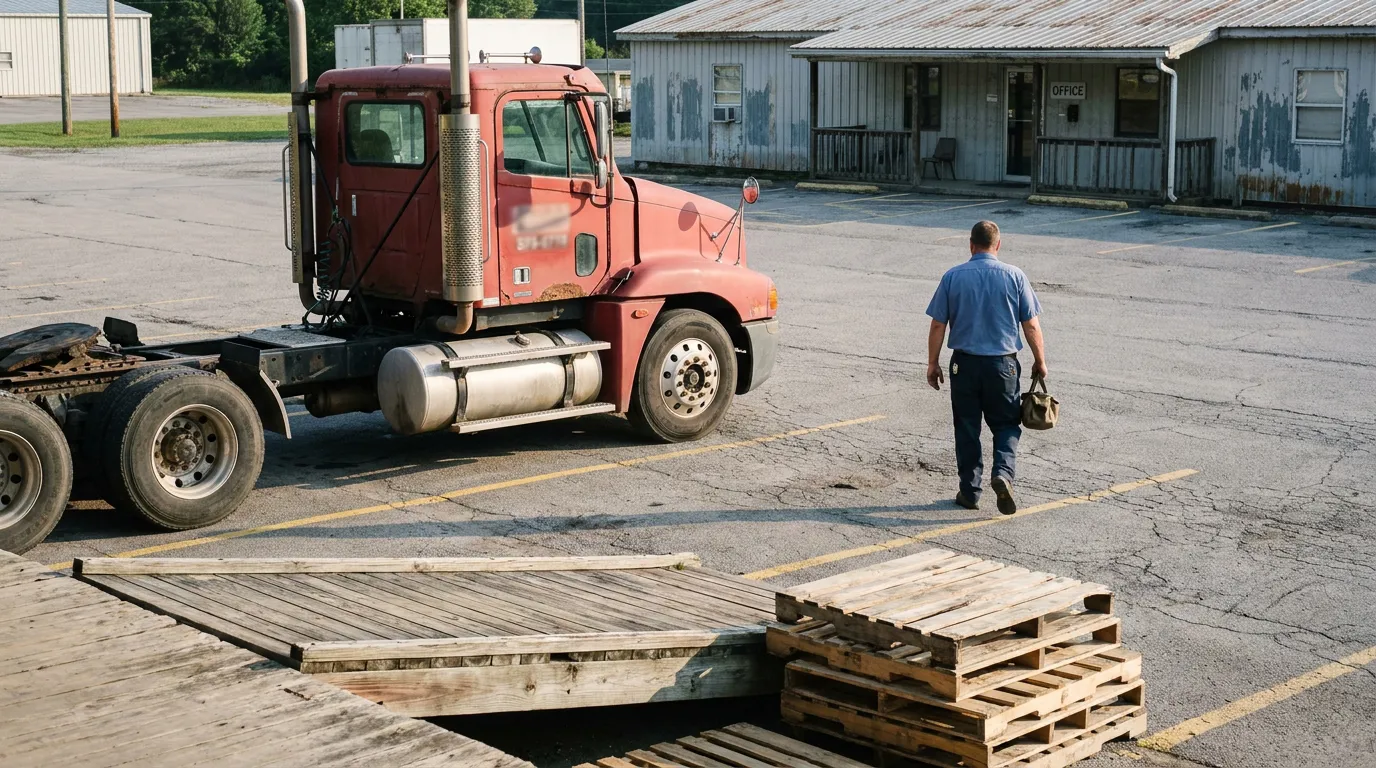
Federal law generally requires trucking companies to keep detailed records on the drivers they put behind the wheel. These include a driver qualification file, hours-of-service logs, and drug and alcohol testing records. If a semi-truck crash on Interstate 79, Interstate 68, or a busy Morgantown road has seriously injured you or a loved one, these records can show whether the carrier hired, trained, and supervised its driver responsibly. Missing or incomplete records may point to trucking company negligence and strengthen your injury claim.
You do not have to dig through federal regulations on your own while you recover or grieve. Robinette Legal Group PLLC helps injured West Virginians demand and review trucking records before carriers can lose or destroy them. Call 304-501-5753 or contact us now for a free consultation about your case.
Why Federal Rules Govern Trucking Records in Morgantown
The Federal Motor Carrier Safety Administration (FMCSA) sets national recordkeeping rules for interstate motor carriers, and those rules generally apply to companies operating in West Virginia. The regulations are found mainly in 49 CFR Parts 382, 383, and 390 through 396, and drug and alcohol testing procedures are in 49 CFR Part 40. A carrier based in Ohio, Pennsylvania, or elsewhere that hauls freight through Monongalia County generally must follow the same requirements.
West Virginia has adopted many federal rules for intrastate carriers, sometimes with modifications. Whether a rule applies can depend on vehicle weight, cargo type, and whether the trip was interstate or intrastate. An attorney can help determine which rules governed the truck that hit you.
What a Driver Qualification File Truck Accident Investigation Can Reveal
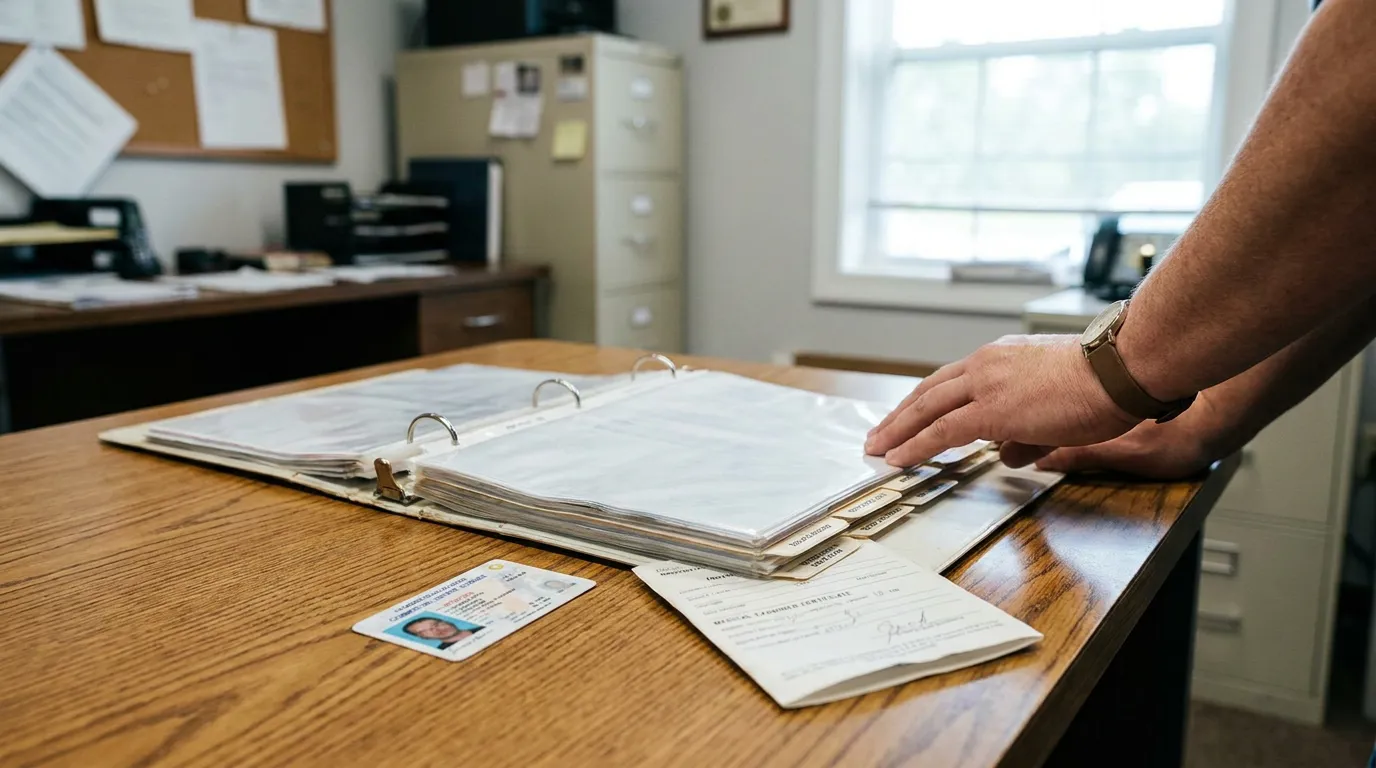
Under 49 CFR 391.51, a motor carrier generally has to keep a driver qualification file for each driver it employs. The file is supposed to show that the carrier checked whether the driver was qualified to drive a commercial vehicle safely. Gaps in this file can be some of the most telling evidence available.
Core Driver Qualification File Documents
The regulation lists specific documents that must go into the file, subject to certain exceptions. These generally include:
- The driver’s employment application (49 CFR 391.21)
- Motor vehicle records from each state where the driver held a license or permit during the previous three years (49 CFR 391.23)
- Investigations into the driver’s safety performance history with prior DOT-regulated employers during the previous three years (49 CFR 391.23)
- A road test certificate or accepted equivalent, such as a valid commercial driver’s license (49 CFR 391.31 and 391.33)
- Annual driving record reviews and the carrier’s notes on those reviews (49 CFR 391.25)
- The medical examiner’s certificate or medical variance documents (49 CFR 391.43 and 391.51)
Commercial driver licensing matters here too. The FMCSA explains that operating many large trucks requires a valid commercial driver’s license under 49 CFR Part 383. If a carrier allowed a driver to operate with a suspended license or an expired medical card, that may support a claim of negligent hiring or retention.
How Long Carriers Must Keep These Files
Carriers generally must keep the driver qualification file for as long as the driver works for them and for three years after the driver leaves (49 CFR 391.51(c)). Some documents, such as annual motor vehicle records, review notes, and medical certificates, may be removed three years after they were created (49 CFR 391.51(d)). Because of these timelines, acting quickly can matter a great deal.
💡 Pro Tip: A prompt preservation (spoliation) letter from your attorney puts the carrier on notice that it must keep driver files, logs, and electronic data. Without one, routine document destruction may legally remove evidence you need.
Hours-of-Service Logs and Electronic Logging Devices
Federal hours-of-service rules generally require drivers to record their duty status, and carriers generally must keep those records. For property-carrying drivers, these rules include an 11-hour driving limit within a 14-hour on-duty window and a 30-minute break after eight cumulative hours of driving.
Most carriers must now use registered Electronic Logging Devices (ELDs) in place of paper logs, with limited exceptions. Under 49 CFR 395.8(k), carriers generally must keep records of duty status and supporting documents, such as fuel receipts and dispatch records, for six months. Fatigue plays a role in many serious truck crashes, and ELD data can show whether a driver was pushed past legal limits.
Exceptions That Can Change What Gets Logged
Some exceptions, including the short-haul and adverse driving conditions exceptions, can change what a driver must record or how long the driver may drive. If a carrier claims an exception applied, its records generally must support that claim. When they do not, the carrier’s own paperwork may contradict its defense.
Drug and Alcohol Testing Records
DOT rules generally require carriers to run a drug and alcohol testing program and keep records under 49 CFR Part 40 and 49 CFR Part 382. The U.S. Department of Transportation’s Office of Drug and Alcohol Policy and Compliance publishes DOT employer testing resources that describe these duties. Required tests generally include pre-employment, random, post-accident, reasonable suspicion, return-to-duty, and follow-up testing.
Under 49 CFR 382.401, verified positive drug results, alcohol results of 0.02 or greater, and refusals generally must be kept for five years. Negative drug results and alcohol results below 0.02 are generally kept for one year. Carriers generally must also check the FMCSA Drug and Alcohol Clearinghouse before hiring a driver and at least once a year after that (49 CFR 382.701). If an impaired driver caused your crash, these records may show whether the company knew about the risk or failed to look for it.
Summary of Key Trucking Records and Retention Periods
The table below summarizes the main record categories and general federal retention periods. Actual requirements can vary depending on the circumstances and exceptions involved.
| Record Type | Governing Regulation | General Retention Period |
|---|---|---|
| Driver qualification file | 49 CFR 391.51 | Employment plus 3 years |
| Records of duty status (ELD/logs) | 49 CFR 395.8 | 6 months |
| Positive drug/alcohol results | 49 CFR 382.401 | 5 years |
| Negative drug/alcohol results | 49 CFR 382.401 | 1 year |
| Inspection and maintenance records | 49 CFR 396.3 | 1 year at the vehicle’s garaging location, plus 6 months after the vehicle leaves the carrier’s control |
Turning Missing Records Into Proof of Trucking Company Negligence
A recordkeeping violation does not prove fault on its own, but it can help establish that the carrier breached its duty of care. To recover damages in West Virginia, you generally must prove duty, breach, causation, and damages. If a carrier skipped background checks or ignored log violations, a jury may consider that evidence in negligent hiring, supervision, or retention claims. In some cases, it may also support punitive damages, which West Virginia limits under W. Va. Code § 55-7-29. You can learn more about federal trucking violations that may support a lawsuit against a carrier.
West Virginia applies modified comparative fault under W. Va. Code § 55-7-13a et seq. An injured person generally can recover damages only if their own fault is not greater than the combined fault of all other parties, and the award is reduced by their share of fault. Trucking insurers often try to shift blame onto victims, so strong documentary evidence matters.
What Your Claim May Include
Serious truck crashes often cause traumatic brain injuries, spinal cord damage, amputations, or wrongful death. Recoverable damages may include medical care, rehabilitation, future treatment, lost wages, reduced earning capacity, pain and suffering, emotional distress, and lost quality of life. An attorney may also find other sources of compensation beyond one insurer’s policy limit, such as excess or umbrella policies, other responsible parties, or your underinsured motorist (UIM) coverage.
Deadlines also apply. Personal injury claims in West Virginia generally must be filed within two years under W. Va. Code § 55-2-12. Wrongful death claims generally must be filed within two years of the death under W. Va. Code § 55-7-6. Limited exceptions may apply, but courts generally apply them narrowly.
💡 Pro Tip: Keep every medical bill, work-absence note, and therapy record from the day of the crash onward. This documentation helps show the full long-term cost of your injuries.
Frequently Asked Questions
1. Can I get the trucking company’s driver qualification file after a crash?
Usually, these records are obtained through formal discovery once a lawsuit is filed, though sometimes earlier through negotiation. A preservation letter sent early can help make sure the records still exist.
2. What happens if the carrier destroyed required records?
If a carrier destroyed evidence after it knew or should have known about a likely claim, a West Virginia court may impose sanctions or give an adverse inference instruction. The remedy depends on the facts.
3. Do these rules apply to owner-operators?
Generally, yes. Owner-operators acting as motor carriers have their own recordkeeping duties under FMCSA rules. Those leased to a carrier are generally covered by that carrier’s records, although exceptions may apply.
4. Does a log violation prove the driver caused my crash?
No, not by itself. A violation can support a negligence claim, but you still need to show it contributed to the collision and your injuries.
5. How soon should I act after a West Virginia truck crash?
As soon as possible. Some records, such as hours-of-service logs, may be kept for only six months, so waiting can put important evidence at risk.
Holding Carriers Accountable Through Their Own Records
Federal rules generally require trucking companies to keep driver qualification files, hours-of-service logs, and drug and alcohol testing records, and each can play a key role in a driver qualification file truck accident claim. These documents can show whether a carrier put an unqualified, fatigued, or impaired driver on the road. Because retention periods are limited and insurers act fast, acting early may help protect your ability to seek full compensation. Speaking with a driver qualification file truck accident lawyer can help you understand your options.
If a commercial truck crash has changed your life, Robinette Legal Group PLLC is ready to investigate what the carrier knew and when it knew it. Call 304-501-5753 or schedule your free consultation today to learn how we can help.
Disclaimer: This content is for informational purposes only and is not legal advice. Every case is unique, and results may vary. Consult an attorney about your specific circumstances.

Jeffery Robinette was admitted to practice law in 1991 and is licensed in all levels of state and federal trial courts in West Virginia. Mr. Robinette is also licensed in all state and federal appeals courts in West Virginia and the United States Supreme Court. As a National Board Certified Trial Attorney who has handled hundreds of motor vehicle, injury, and construction defect claims and a leading author on insurance claims settlement issues and difficulties in West Virginia, Jeff Robinette is uniquely qualified to represent your best interest.