

Why the Long Descent Into Morgantown Changes Everything About Your Crash Claim
Key Takeaways: The 5% grade on Interstate 68 can turn routine driving errors into catastrophic collisions because sustained downgrades may cause brake fade and runaway truck scenarios producing spinal cord injuries, brain trauma, and other life-altering harm. For a Morgantown injury claim, the grade may reshape how fault is investigated, and West Virginia’s modified comparative fault rule under W. Va. Code §55-7-13C generally reduces recovery by a plaintiff’s share of fault and may bar recovery entirely if that share exceeds the combined fault of all other parties. Insurers often invoke that threshold by claiming you followed too closely or drove too fast for the descent, so early fault percentages should not be assumed final. Critical proof, electronic control module data, brake inspection findings, hours-of-service logs, and skid evidence, can disappear quickly, making prompt investigation important. Damages may include emergency and long-term medical care, diminished earning capacity, and non-economic losses, though policy limits may require identifying additional coverage layers such as underinsured motorist or motor carrier policies. Most personal injury actions must generally be filed within two years under W. Va. Code §55-2-12, and claims involving governmental entities may carry separate notice, filing, and forum requirements.
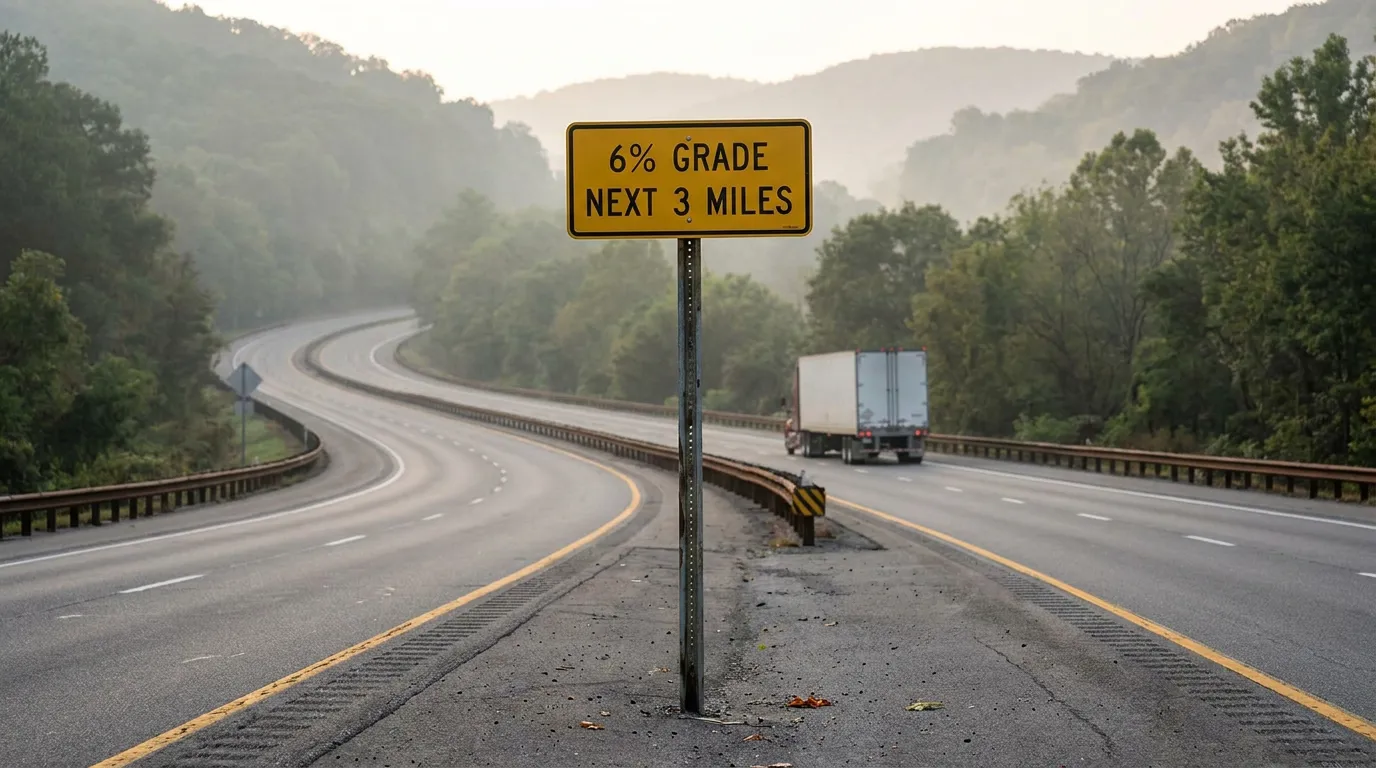
The 5% grade on Interstate 68 is not just a topographic detail, it’s a physics problem that can turn an ordinary lane-change error into a catastrophic collision. When a loaded tractor-trailer descends toward the Cheat Lake and Morgantown corridor, gravity works against every brake pad, and passenger vehicles may absorb the consequences. The grade can affect how fault is investigated, how insurers argue the case, and how much of a recovery survives West Virginia’s comparative fault rules.
If you or a loved one suffered serious injuries on this stretch of highway, the team at Robinette Legal Group PLLC is prepared to investigate the grade, the vehicles, and the conduct that caused the crash. Call 304-501-5753 or contact us now to discuss what happened and what your claim may involve.
What Makes Interstate 68 Dangerous for Morgantown Drivers
Sustained downgrades create a very different risk profile than flat interstate travel. On a prolonged 5 percent grade, a heavy truck’s brakes convert kinetic energy into heat, and heat is the enemy of stopping power. When a driver rides the brakes rather than descending in a proper low gear, brake fade can develop gradually and then fail suddenly, one way a runaway truck scenario may unfold on I-68.
The severity of resulting injuries often separates a grade-related crash claim from a routine fender bender. Victims can sustain spinal cord damage, traumatic brain injuries, crushed limbs, internal organ trauma, and burns requiring months of surgery, often leaving families managing emergency air transport bills and intensive care stays before speaking to any adjuster.
Traffic volume can compound the hazard. The corridor carries substantial daily traffic between Morgantown, the I-79 interchange, and points east, mixing commuter, university, and interstate freight traffic. This overview of I-68 truck traffic risks explains how heavy-vehicle volume can turn a wreck into a commercial trucking case.
How West Virginia’s Comparative Fault Rule Shapes Recovery
West Virginia applies a modified comparative fault standard, often the single most important legal concept in a steep grade truck crash case. Under W. Va. Code §55-7-13C, the trier of fact determines each party’s percentage of fault, and a plaintiff’s recoverable damages are generally reduced by their own share. Recovery is generally barred if the plaintiff’s fault exceeds the combined fault of all other contributing parties, commonly called the 51% bar rule, meaning a plaintiff found exactly 50% at fault may still recover a reduced award.
That threshold is one reason insurers may work hard to shift blame onto the injured person. An adjuster may argue you were following too closely, traveling too fast for the grade, or failed to react to a slowing truck ahead. The doctrine of comparative negligence replaced the older all-or-nothing contributory negligence rule in most jurisdictions, but under West Virginia’s version, even a moderate fault percentage can meaningfully reduce what an injured family receives.
Fault Can Be Assigned to Parties Who Are Not in the Courtroom
West Virginia’s statutory scheme also permits fault to be considered, subject to procedural requirements like timely notice and sufficient evidence, for non-parties whose conduct contributed to the injury. This can cut both ways, allowing a plaintiff to point to a negligent motor carrier, maintenance contractor, or roadway-condition entity, while also allowing a defendant to spread blame elsewhere, though such allocation generally does not create a judgment against that non-party.
Claims implicating public roadway design or maintenance may carry additional layers. West Virginia’s Governmental Tort Claims and Insurance Reform Act (W. Va. Code §29-12A-1 et seq.) governs liability, immunities, and damage limits for political subdivisions, while claims against state agencies like the Division of Highways generally proceed through the West Virginia Legislative Claims Commission rather than circuit court. Notice requirements, immunities, shortened deadlines, and damage caps may apply differently than claims against private drivers or trucking companies.
| Fault Scenario | Effect Under W. Va. Code §55-7-13C |
|---|---|
| Plaintiff found 0% at fault | Full damages, subject to available coverage |
| Plaintiff found 20% at fault | Damages generally reduced by 20% |
| Plaintiff found 50% at fault | Damages generally reduced by 50% |
| Plaintiff found more than 50% at fault | Recovery generally barred |
💡 Pro Tip: Never accept an adjuster’s early fault percentage as final. Initial assessments are often made before download of the truck’s electronic control module, brake inspection reports, or dashcam footage, all of which can shift the analysis.
Evidence That Disappears Fast After a WV Highway Grade Accident
Proof of a truck’s negligence on a downgrade is often perishable. Brake adjustment measurements, gear selection data, hours-of-service logs, and pre-trip inspection records can be altered, overwritten, or lawfully destroyed once federal retention periods expire, although a timely preservation demand may change what a carrier must retain. Vehicles may be repaired or scrapped, and skid evidence can wash away within days.
Several categories of evidence deserve immediate attention:
- Electronic control module and event data recorder downloads from all involved vehicles
- Post-crash brake and mechanical inspection findings from investigating officers
- Driver qualification files, training records, and hours-of-service documentation
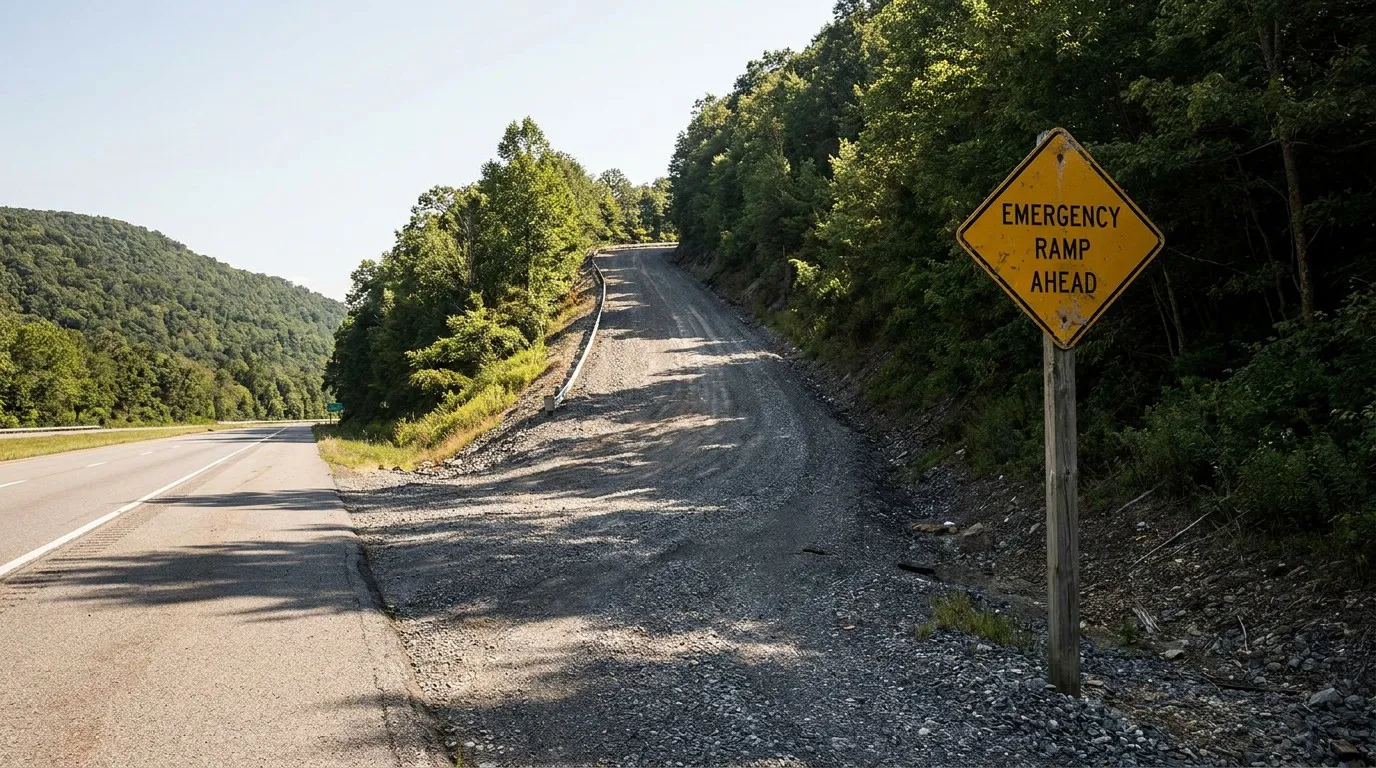
- Photographs of grade signage, runaway truck ramps, and sightlines at the crash location
- Complete emergency, surgical, and rehabilitation records documenting injury severity
Medical documentation serves as evidence of damages, not merely treatment. Gaps in care and delayed diagnostic imaging are routinely used by insurers to argue injuries were minor or unrelated. Consistent, contemporaneous treatment records, often supported by qualified medical opinion, may help connect a specific mechanism of injury to a specific harm.
The Full Scope of Damages in a Serious Morgantown Injury Claim
Catastrophic collisions can produce losses extending far beyond the first hospital bill. Emergency transport, trauma surgery, orthopedic hardware, inpatient rehabilitation, home health care, assistive equipment, and decades of follow-up treatment may all form part of a medical damages claim, subject to proof that care is reasonable, necessary, and related to the crash. Life care planning may be appropriate when a spinal or brain injury requires permanent support.
Economic losses may also include what the injury takes from your future. Lost wages during recovery are often just the starting point; diminished earning capacity addresses the reality that a worker may never return to the same physical role. Vocational and economic analysis is often necessary to quantify that loss credibly.
Non-economic harm may be compensable under West Virginia law. Chronic pain, disfigurement, emotional distress, loss of independence, and loss of life’s activities may fall within recoverable damages, subject to statutory limitations in certain case categories, such as caps on noneconomic damages in medical professional liability actions, which generally do not apply to ordinary motor vehicle claims. A skilled Morgantown injury claim attorney can help document these losses through treating physicians, family testimony, and daily-impact evidence.
When Policy Limits Threaten to Cap a Legitimate Claim
Even a well-documented catastrophic claim may be constrained by the at-fault party’s insurance limits. A private motorist may carry only West Virginia’s minimum required coverage, which can be a fraction of a single ICU stay. This is why identifying every available coverage layer matters.
Additional recovery sources may exist, including underinsured/uninsured motorist coverage on your own policy, umbrella policies, motor carrier liability coverage, broker or shipper liability, cargo securement contractors, and vehicle or component manufacturers. Whether any apply depends on the facts, policy language, and consent or notice conditions that underinsured motorist coverage often imposes before a liability settlement.
Deadlines That Control Whether a Claim Survives
West Virginia generally requires personal injury lawsuits to be filed within two years. Under W. Va. Code §55-2-12, every personal action for which no other limitation is prescribed generally must be brought within two years after the right accrued, including actions for injury to person or property. Other deadlines may govern particular claims, such as wrongful death, and missing the applicable window may end a claim regardless of the underlying facts’ strength.
Exceptions exist, but courts generally interpret them narrowly. The discovery rule, tolling for minors, and other limited doctrines may apply in specific circumstances, yet none should be assumed automatic. Claims involving governmental entities may also carry separate notice, filing, or forum requirements independent of the ordinary civil filing deadline.
💡 Pro Tip: Preserve your own vehicle, damaged safety equipment, and clothing until counsel has evaluated the case. Once a vehicle is released to salvage, crash reconstruction options may narrow considerably.
Frequently Asked Questions
1. Can I still recover if I was partly at fault for a crash on the grade?
Potentially yes, provided your fault share is not greater than the combined fault of the other contributing parties. Damages may be reduced proportionally under West Virginia’s modified comparative fault framework, and outcomes depend heavily on the specific evidence.
2. Does the road design itself ever support a claim?
It may, under certain circumstances. Fault can potentially be allocated to entities responsible for roadway design, signage, or maintenance, but claims against political subdivisions or state agencies may involve immunities, damage limits, notice requirements, and separate filing forums requiring careful early analysis.
3. What if the truck driver claims the brakes failed?
Mechanical failure is rarely a complete defense. Maintenance obligations, inspection records, and gear selection on a sustained descent may all be scrutinized, and a failure caused by inadequate upkeep may itself constitute negligence by the driver or motor carrier, while a genuinely sudden, unforeseeable failure may raise separate product liability questions.
4. How long do I have to bring a case?
The general limitation period for personal injury actions in West Virginia is generally two years from accrual under W. Va. Code §55-2-12. Because exceptions are limited and narrowly applied, and other deadlines may govern certain claims or defendants, waiting to seek guidance may carry substantial risk.
5. Should I give a recorded statement to the trucking company’s insurer?
You are generally not obligated to provide a recorded statement to another party’s insurer, though your own policy may impose cooperation duties toward your own insurer. Statements are frequently used to develop comparative fault arguments, so it’s often prudent to obtain guidance before speaking with an adjuster.
Protecting What Matters After a Life-Changing Collision
The 5% grade that makes Interstate 68 dangerous may also be the detail many insurers hope you overlook. It can shape stopping distances, brake performance, and the credibility of fault arguments raised against you. Under W. Va. Code §55-7-13A and §55-7-13C, fault percentages generally influence what an injured person may recover, meaning the investigation conducted in the first weeks can significantly affect a claim’s value. Serious injuries deserve a serious response, built on preserved evidence, thorough medical documentation, and a clear-eyed accounting of every economic and human loss involved.
If a crash on the Morgantown descent has changed your family’s life, the attorneys at Robinette Legal Group PLLC are ready to listen and evaluate your options. Call 304-501-5753 today or schedule a consultation to learn how West Virginia’s comparative fault rules may apply to your circumstances.
Disclaimer: This content is for informational purposes only and is not legal advice. Every case is unique, and results may vary. Consult an attorney about your specific circumstances.

Jeffery Robinette was admitted to practice law in 1991 and is licensed in all levels of state and federal trial courts in West Virginia. Mr. Robinette is also licensed in all state and federal appeals courts in West Virginia and the United States Supreme Court. As a National Board Certified Trial Attorney who has handled hundreds of motor vehicle, injury, and construction defect claims and a leading author on insurance claims settlement issues and difficulties in West Virginia, Jeff Robinette is uniquely qualified to represent your best interest.