


Turning a Devastating Morgantown Crash Into a Path Toward Full Recovery
Key Takeaways: Maximizing compensation after a catastrophic Morgantown motorcycle crash depends on thoroughly proving fault, documenting every category of damages, and identifying all available sources of recovery. West Virginia’s modified comparative fault rule under WV Code §55-7-13a allows a partially at-fault rider to recover if their fault is not greater than the combined fault of all other responsible parties. Because §55-7-13c makes each defendant liable only for their proportionate share, injured riders often need to pursue multiple at-fault parties. However, drunk or criminal defendants can be held jointly and severally liable for the full award. Catastrophic injuries justify pursuing broad damages, including medical care, lost earning capacity, and non-economic losses spanning decades. When policy limits cap a strong claim, an attorney can investigate underinsured motorist coverage, third-party liability, and additional defendants. Acting early to preserve evidence, avoid harmful recorded statements, and secure knowledgeable counsel protects the claim from insurer tactics.
Maximizing compensation after a catastrophic motorcycle crash in Morgantown begins with understanding how West Virginia’s fault rules, damage categories, and insurance limits shape your recovery. When another driver’s negligence leaves a rider with life-altering injuries, the difference between a partial settlement and full compensation often comes down to how thoroughly liability is proven and how completely every source of recovery is identified.
If you or a loved one suffered serious harm in a wreck caused by someone else, the team at Robinette Legal Group PLLC is ready to help you understand your options. Call our office at 304-594-1800 or reach out through our online case review request to discuss how West Virginia law applies to your situation.
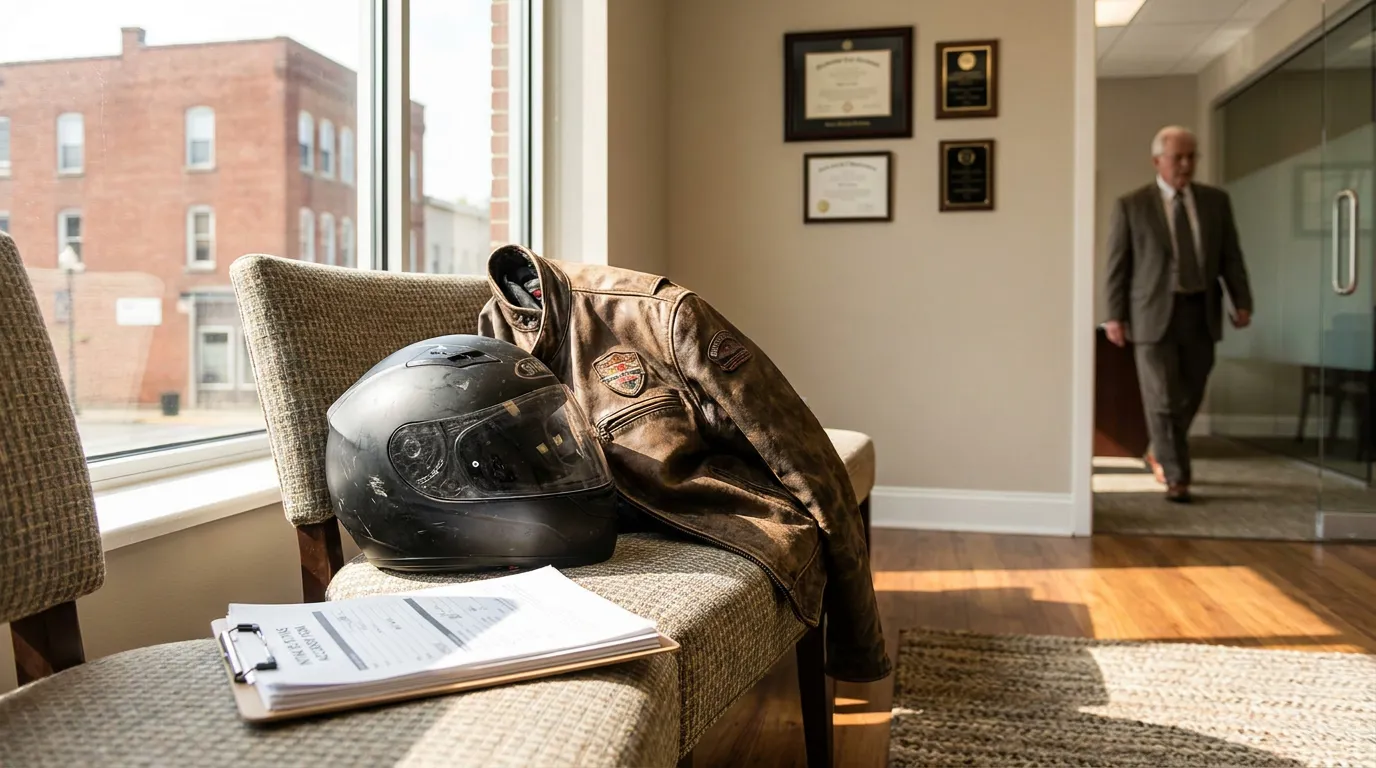
How West Virginia’s Comparative Fault System Affects Your Recovery
West Virginia uses a modified comparative fault standard that can reduce, but does not automatically erase, a rider’s recovery. The governing statute, West Virginia’s modified comparative fault standard, under WV Code §55-7-13a matters enormously for injured motorcyclists, who are too often blamed by insurers for crashes caused by inattentive drivers.
Under §55-7-13a(a), "comparative fault" means the degree to which the fault of a person was a proximate cause of an alleged personal injury or death or damage to property, expressed as a percentage. The trier of fact assigns a number to each person’s conduct, determining who pays what. Because §55-7-13a(c) requires that total percentages must equal zero or one hundred percent, every share of responsibility must be fully accounted for.
A partially at-fault rider can still recover, subject to an important threshold. Under §55-7-13c(c), a plaintiff’s fault does not bar recovery unless it exceeds the combined fault of all other responsible persons; otherwise, recovery is reduced proportionally. This is why disputed-fault claims are worth pursuing even when an insurer insists the rider was to blame.
💡 Pro Tip: Preserve your gear, helmet, and damaged motorcycle exactly as they were after the crash. Physical evidence frequently helps rebut an insurer’s attempt to inflate a rider’s percentage of fault.
Why Several Liability Makes Identifying Every Defendant Critical
In West Virginia, each defendant is generally responsible only for their proportionate share of damages. The rules governing several liability for damages provide, under §55-7-13c(a), that each defendant’s liability for compensatory damages shall be several only, not joint, with each liable only in proportion to their percentage of fault. For a catastrophically injured rider, this means pursuing multiple at-fault parties rather than collecting an entire award from a single source.
Under §55-7-13a(b), in any action for personal injury, property damage, or wrongful death, liability is allocated to each person, including plaintiffs, defendants, and nonparties, in direct proportion to their percentage of fault. Understanding this framework early helps a rider avoid settling with one party before all responsible parties are identified.
Certain limits can shrink the pool of recoverable damages. Under §55-7-13c(g), fault allocated to an immune defendant or one whose liability is limited by law may not be reallocated to other defendants. Conversely, §55-7-13c(d) allows a plaintiff who cannot collect from a liable defendant, despite good-faith efforts, to move for reallocation among other liable parties within one year of final judgment, though the statute bars reallocating uncollectible amounts to defendants whose fault equals or is less than the plaintiff’s.
There is a notable exception that can restore full joint-and-several liability. Under §55-7-13c(h), defendants who were driving under the influence, engaging in criminal conduct, or illegally disposing of hazardous waste that proximately causes the plaintiff’s damages shall be jointly and severally liable. This means a rider struck by a drunk driver may recover the entire award from that solvent defendant rather than being limited to a proportional share.
💡 Pro Tip: If law enforcement suspected impairment, ask whether a chemical test was performed. Documented intoxication can change the entire liability structure of your claim.
The Full Scope of Damages in a Catastrophic Motorcycle Injury Case
Serious motorcycle crashes frequently produce spinal cord injuries that reshape every part of a victim’s life. According to the Mayo Clinic spinal cord injury resource, motor vehicle crashes are the leading cause of spinal cord injuries for people under 65, often causing permanent changes in strength, feeling, and other body functions below the injury site.
Riders and their families are entitled to pursue a broad range of losses when injuries are severe:
- Emergency care, hospitalization, surgery, physical therapy, and future ongoing treatment costs
- Lost wages and diminished earning capacity caused by the injury
- Pain and suffering, emotional distress, and lasting impact on quality of life
- Non-economic harm, including mental, emotional, and social side effects beyond physical injury
Historically, young adults ages 16 to 30 accounted for a majority of spinal cord injuries (more than all other age groups combined), though more recent data shows the average age at injury has risen to approximately 44 years, reflecting a broader distribution across age groups. When a young rider faces a lifetime of care, accurately projecting future medical and wage-related damages becomes central to maximizing a motorcycle settlement.
Insurance policy limits can cap even a strong claim, so identifying additional sources is essential. An experienced attorney can investigate underinsured motorist (UIM) coverage, third-party liability, and additional responsible parties to help capture the full scope of motorcycle injury damages a victim may be owed.
| Damage Category | Examples | Why It Matters |
|---|---|---|
| Economic | Surgery, rehabilitation, lost income | Documents measurable financial harm |
| Future costs | Ongoing care, diminished earning capacity | Reflects long-term impact of catastrophic injury |
| Non-economic | Pain, emotional distress, reduced quality of life | Recognizes losses beyond receipts |
💡 Pro Tip: Keep a written journal of your daily pain levels, missed activities, and emotional struggles. This contemporaneous record can support non-economic damages that are otherwise hard to quantify.
Working With a West Virginia Motorcycle Accident Lawyer to Protect Your Claim
A knowledgeable West Virginia motorcycle accident lawyer focuses on building the proof required to establish duty, breach, causation, and damages. Because alcohol use is involved in about 25% of traumatic spinal cord injuries, investigating whether impairment contributed to a crash can be meaningful for establishing liability. Careful legal work includes preserving evidence, consulting treating providers, and countering insurer tactics designed to minimize recovery.
Trusted representation also means being candid about the limits and uncertainties of the law. Comparative fault percentages, reallocation motions, and policy-limit issues are fact-dependent, and no responsible attorney can guarantee a particular result. Robinette Legal Group PLLC brings extensive experience and an award-winning reputation to representing injured riders across Morgantown and neighboring counties.
You can learn more about how our firm approaches these claims on our West Virginia motorcycle accident lawyer practice page. Choosing counsel early helps protect evidence and deadlines before an insurer gains an advantage.
💡 Pro Tip: Avoid giving a recorded statement to the at-fault driver’s insurer before speaking with an attorney. Early statements are frequently used to argue a higher fault percentage against you.
Frequently Asked Questions
1. Can I still recover if I was partly at fault for the Morgantown crash?
Yes, in many cases. Under §55-7-13c(c), your fault does not bar recovery unless it exceeds the combined fault of all other responsible persons, though recovery is reduced proportionally to your own percentage of fault.
2. What happens if one at-fault driver cannot pay?
West Virginia provides a limited mechanism to address this. Under §55-7-13c(d), if good-faith collection efforts fail, you may move to reallocate the uncollectible amount among other liable parties within one year of final judgment, subject to statutory conditions including that no amount may be reallocated to a defendant whose fault equals or is less than yours.
3. Does a drunk driver face greater liability?
Under certain circumstances, yes. Section §55-7-13c(h) provides that a defendant driving under the influence whose conduct proximately causes your damages may be held jointly and severally liable, expanding your ability to recover the full award.
4. What if the insurance policy is too small to cover my injuries?
Policy limits can cap a claim, but other sources may exist. An attorney can investigate underinsured motorist coverage, third-party liability, and additional defendants to identify further West Virginia motorcycle compensation beyond a single policy.
5. Why are motorcycle spinal injury claims worth so much?
Because these injuries often cause permanent loss of function. Spinal cord injuries can require lifelong care and diminish earning capacity, frequently affecting younger riders with long future-care horizons, all of which increase claim value.
Taking the Next Step Toward Fair Compensation
Maximizing recovery after a catastrophic Morgantown motorcycle crash depends on proving fault carefully, documenting the full range of damages, and identifying every available source of compensation. West Virginia’s modified comparative fault rules under WV Code §55-7-13a and the several-liability provisions of §55-7-13c create both challenges and opportunities for injured riders. With the right approach, a rider facing life-altering injuries can pursue substantial medical costs, lost earnings, and non-economic losses they have suffered.
To discuss your West Virginia rider claim with a team trusted by injured clients, contact Robinette Legal Group PLLC today. Call 304-594-1800 or submit your details through our confidential contact form to learn how we can help you pursue the full compensation you deserve.

Jeffery Robinette was admitted to practice law in 1991 and is licensed in all levels of state and federal trial courts in West Virginia. Mr. Robinette is also licensed in all state and federal appeals courts in West Virginia and the United States Supreme Court. As a National Board Certified Trial Attorney who has handled hundreds of motor vehicle, injury, and construction defect claims and a leading author on insurance claims settlement issues and difficulties in West Virginia, Jeff Robinette is uniquely qualified to represent your best interest.