
When a Truck’s Load Shifts, the Consequences Can Be Devastating
Key Takeaways: Cargo securement negligence generally involves a carrier, driver, or third-party loader failing to properly block, brace, or tie down freight, allowing it to shift, spill, or fall. Federal rules at 49 CFR §§ 393.100, 393.136 set measurable performance criteria, working load limits, and commodity-specific requirements that may apply to enclosed trailers just as much as flatbeds. A violation can be powerful evidence of a breach of duty, but a Morgantown claimant must still prove duty, breach, causation, and damages, typically through reconstruction analysis and medical testimony. Securement failures may reveal systemic carrier problems such as missing training records, unsafe delivery schedules, worn hardware, and skipped inspections. Damages may span emergency care, lifetime medical needs, lost earning capacity, non-economic harm, and wrongful death losses, with recovery sometimes requiring a search for excess, shipper, broker, or underinsured motorist coverage. West Virginia’s general two-year limitations period and the rapid loss of trucking evidence make early investigation and preservation demands critical.
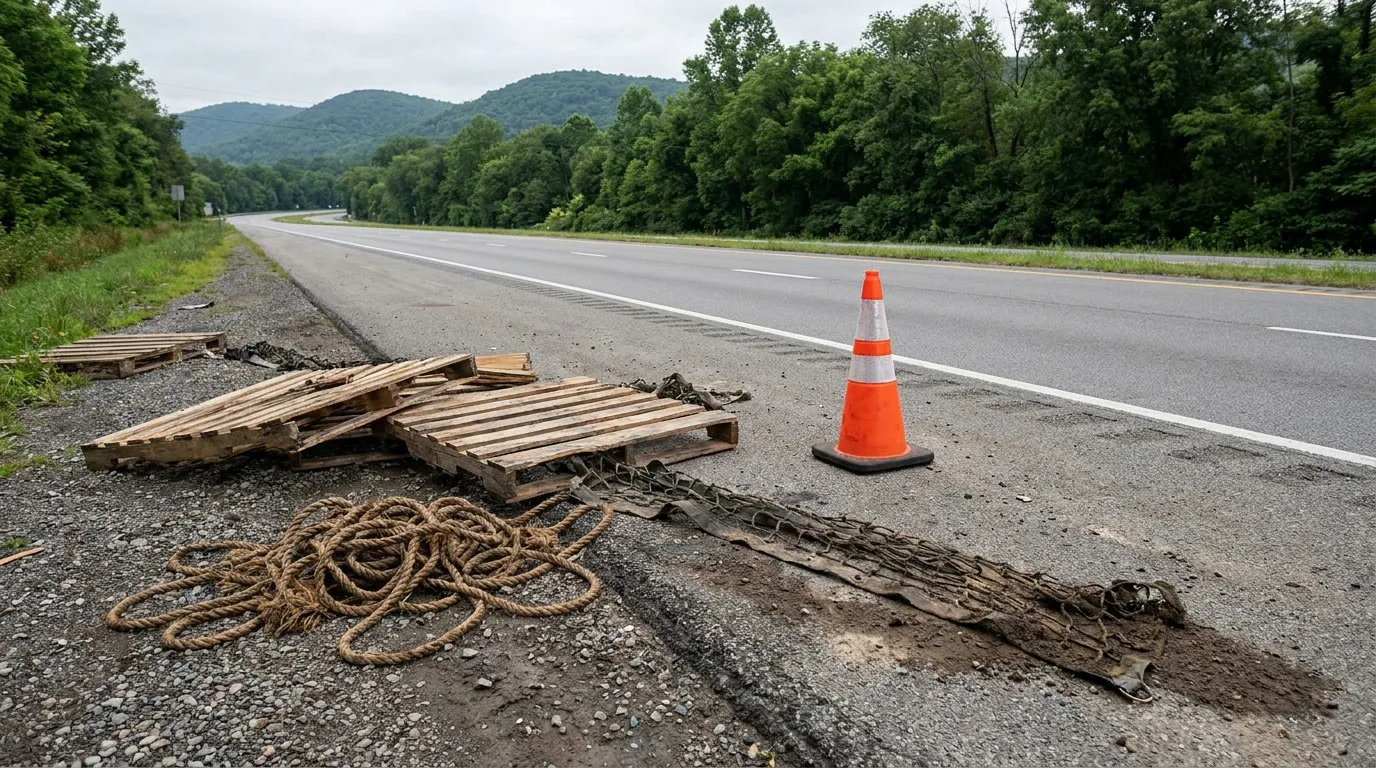
Cargo securement negligence occurs when a trucking company, driver, or third-party loader fails to properly block, brace, or tie down freight, allowing it to shift, spill, or fall from the vehicle. Federal law sets the baseline: under 49 CFR § 393.100, cargo on a commercial motor vehicle must generally be firmly immobilized. When that standard is breached and a Morgantown motorist suffers catastrophic injuries as a result, the violation may serve as evidence of negligence in a civil claim. A steel coil breaking loose, logs sliding forward, or a trailer rolling because freight migrated during a turn can leave victims with spinal cord damage, traumatic brain injuries, crush injuries, or fatal trauma.
If you or a loved one suffered serious harm in a crash involving improperly secured freight, the team at Robinette Legal Group PLLC is prepared to investigate what went wrong. Call 304-501-5753 or contact us now to discuss your situation in a confidential consultation.
The Federal Rules That Define a Carrier’s Duty of Care
Federal cargo securement standards generally apply to interstate commercial motor vehicle operations nationwide, meaning a carrier hauling through Monongalia County may be held to the same requirements as one operating in Ohio or Pennsylvania. The FMCSA’s cargo securement rules are codified at 49 CFR §§ 393.100, 393.136. Most states, including West Virginia, have adopted comparable requirements for intrastate carriers governing how freight must be loaded, blocked, braced, and tied down to prevent movement during transport. These regulations set measurable performance criteria and engineering thresholds that can often be tested after a crash.
Performance Criteria and Working Load Limits
Two categories of requirements typically do most of the work in a cargo securement case. The first is the general performance standard: cargo must be secured so it cannot shift, spill, or fall, and so shifting does not adversely affect the vehicle’s stability. The second is the aggregate working load limit of the securement system. Under 49 CFR § 393.106, this limit must generally be at least one-half the weight of the cargo, with the number of tiedowns also depending on length and weight.
These numbers can matter enormously in litigation. If a reconstruction engineer determines that a 40,000-pound load was restrained by tiedowns well below the regulatory minimum, that calculation may become concrete, documentable evidence of a breach rather than an argument about what a reasonable driver should have done.
Commodity-Specific Requirements
Beyond the general rules, federal regulations impose detailed securement requirements tailored to particular cargo types. Sections 393.116 through 393.136 address logs, dressed lumber, metal coils, paper rolls, concrete pipe, intermodal containers, automobiles, heavy machinery, and boulders, each with its own benchmarks for tiedown placement, chocking, and restraint methods.
This specificity can benefit injured victims. When a crash involves logs on a hauler traveling through north-central West Virginia, an attorney may point to the exact subsection governing log securement and compare it against what the driver actually did.
What Cargo Securement Violations Reveal About Carrier Practices
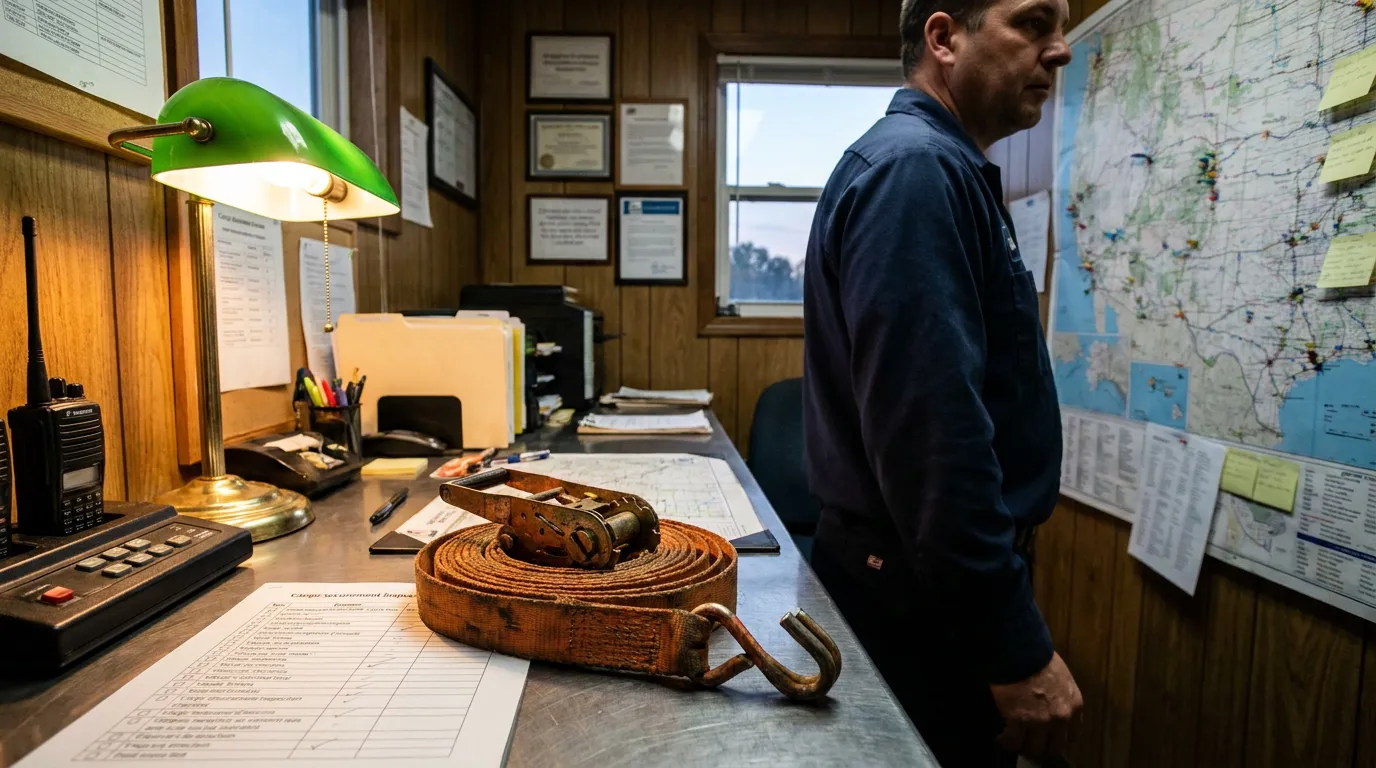
A single securement failure can signal deeper problems within a trucking operation. Federal regulations require carriers to ensure drivers and loading personnel are knowledgeable about proper securement techniques and that devices are inspected. When a carrier cannot produce training records, inspection logs, or written procedures after a crash, that absence may support an argument that the company failed to meet its regulatory obligations.
These violations may often trace back to systemic pressures rather than one careless moment:
- Delivery schedules that discourage drivers from re-checking tiedowns after the first 50 miles
- Third-party shippers or warehouse crews who load trailers without carrier oversight
- Worn, corroded, or undersized straps, chains, and binders never removed from service
- Drivers who received no meaningful instruction on commodity-specific requirements
- Failure to conduct required en-route inspections of the load
Establishing this pattern can be significant. A carrier’s direct negligence in hiring, training, or supervising may exist alongside vicarious liability for the driver’s conduct, though pursuing both theories together can depend on whether the carrier admits the driver was acting within the scope of employment.
💡 Pro Tip: Bills of lading, loading dock video, weigh station records, and electronic logging device data are often overwritten or discarded within weeks. A prompt written preservation demand sent to the carrier and any third-party loader can help prevent the loss of decisive evidence.
Enclosed Trailers Are Not Exempt
A persistent misconception is that securement rules apply only to flatbeds and open trailers. They do not. FMCSA has confirmed that the rules for enclosed cargo areas apply to trucks and trailers with enclosed compartments, and the general performance criteria of Subpart I must generally be satisfied regardless of whether freight is visible from outside.
A box truck or dry van whose pallets slide forward during hard braking can contribute to a loss of control, and the fact that no straps were visible to bystanders does not necessarily insulate the carrier. Defense arguments that "the cargo was inside, so nothing could fall off" may misread the regulation, which is concerned with shifting within the vehicle as much as with items departing it.
Turning a Regulatory Violation Into a Negligence Claim
A federal violation is evidence, not an automatic verdict. In West Virginia, a plaintiff pursuing a negligence claim must generally establish duty, breach, causation, and damages. Regulatory violations can help address the first two elements by supplying an objective standard of care. West Virginia courts have generally treated the violation of a safety statute or regulation as prima facie evidence of negligence rather than conclusive liability, and the plaintiff must still show the violation proximately caused an injury of the type the rule was designed to prevent. This is fact-dependent, so no violation should be assumed to be case-dispositive.
Causation remains a separate hurdle. The evidence must connect the securement failure to the crash mechanics and then to the specific injuries claimed, typically requiring accident reconstruction analysis, examination of the physical hardware, and medical testimony linking the collision forces to the harm suffered.
Understanding which federal trucking violations support a lawsuit against a West Virginia carrier may help injured people recognize when a crash involved more than ordinary driver error.
Deadlines That Can End a Claim Before It Begins
West Virginia generally imposes a two-year limitations period for personal injury actions under W. Va. Code § 55-2-12. Wrongful death claims are governed separately by W. Va. Code § 55-7-6, which generally requires suit within two years of the date of death rather than the date of injury. Limited exceptions, including discovery-rule principles and tolling for minors or incapacity, may apply in narrow circumstances but should never be assumed to extend a deadline.
If a government entity or public employer is involved, separate pre-suit notice requirements and potential damages caps or immunities may apply, distinct from the civil limitations period. Failing to satisfy either can bar or limit recovery, which is one reason early consultation matters.
The Full Scope of Damages in a Serious Cargo-Related Crash
Victims of a Morgantown truck accident involving unsecured freight often face costs that may extend decades beyond the initial hospitalization. A fully loaded tractor-trailer may weigh up to 80,000 pounds under federal limits, roughly 20 times the weight of a typical passenger vehicle, and the resulting injuries are frequently permanent. Documenting the full financial and human toll is central to any meaningful recovery.
| Category of Loss | What It May Include |
|---|---|
| Emergency and acute care | Ambulance transport, trauma surgery, ICU stays, imaging |
| Ongoing medical treatment | Physical therapy, revision surgeries, pain management, assistive devices |
| Future care costs | Life care planning, home modifications, in-home nursing |
| Lost income | Wages missed during recovery and reduced earning capacity |
| Non-economic harm | Pain, emotional distress, loss of enjoyment of life |
| Wrongful death losses | Funeral expenses, lost financial support, loss of companionship |
Insurance policy limits can present a practical ceiling that surprises many families. Even a well-documented catastrophic injury claim may be constrained by the at-fault party’s available coverage. Attorneys handling truck cargo liability matters often look beyond the primary policy for additional recovery sources, including excess or umbrella layers, the shipper’s or loader’s separate coverage, a broker’s policy, and the injured person’s own underinsured motorist benefits, subject to each policy’s terms. Identifying every potentially applicable layer early may meaningfully affect the outcome.
Our firm’s approach to Morgantown truck accident attorney representation emphasizes early investigation, preservation of carrier records, and thorough documentation of long-term damages.
Practical Steps After a Crash Involving Improperly Secured Freight
What happens in the days following a serious truck crash can shape the case for years. Injured victims are usually in no condition to gather evidence themselves, which is why family members and legal counsel often take on that role. The following steps are generally worth prioritizing:
- Obtain the full crash report, including any commercial vehicle inspection performed at the scene
- Photograph the cargo, tiedowns, straps, chains, and trailer configuration before the wreckage is cleared
- Identify every entity involved: motor carrier, driver, shipper, loading facility, broker, and trailer owner
- Follow all medical recommendations and keep records of every appointment, prescription, and limitation
- Decline recorded statements to the carrier’s insurer until you have consulted with counsel
💡 Pro Tip: Post-crash roadside inspection reports sometimes note securement violations in real time. These contemporaneous findings by trained inspectors may carry weight and are worth requesting early.
Frequently Asked Questions
1. Does a cargo securement violation automatically prove the trucking company was negligent?
Not automatically. A violation can serve as evidence of a breach of the duty of care, and West Virginia courts have generally treated such violations as prima facie evidence of negligence rather than conclusive proof of liability. Causation and damages still must be independently proven.
2. Who besides the driver can be held responsible for improperly secured freight?
Liability may extend to the motor carrier, a third-party shipper or warehouse that loaded the trailer, a freight broker, or a maintenance provider responsible for securement hardware. Federal regulations generally place responsibility on carriers and drivers, but state common law may reach other parties whose conduct contributed to the failure. Claims against brokers can raise additional questions, including federal preemption defenses.
3. What if the cargo was inside an enclosed trailer rather than on a flatbed?
The federal securement requirements generally apply to enclosed cargo areas as well. Cargo inside a van or box truck must still be immobilized so it does not shift enough to affect the vehicle’s stability, and failure to do so may support an unsecured load negligence claim.
4. How long do I have to file a truck injury claim in West Virginia?
Personal injury actions are generally subject to a two-year limitations period under W. Va. Code § 55-2-12, and wrongful death actions are generally subject to a separate two-year period running from the date of death. Certain narrow exceptions may apply, but waiting is rarely advisable given how quickly trucking evidence disappears.
5. What evidence tends to matter most in a cargo securement case?
Securement hardware, loading documentation, driver training and inspection records, electronic logging data, scene photographs, and roadside inspection findings are frequently central. Because carriers control much of this material, early preservation demands are important.
Holding Carriers to the Standard the Law Sets
Cargo securement rules exist because loose and shifting freight can cause serious and fatal crashes. When a carrier or loader disregards the requirements of 49 CFR Part 393, Subpart I, and a Monongalia County truck crash leaves someone with life-altering injuries, those federal standards may give injured victims an objective measure against which to judge the conduct that harmed them. Proving such a case generally requires moving quickly, securing physical evidence before it disappears, and building a damages record that reflects the true lifetime cost of a catastrophic injury. Every case turns on its own facts, and no outcome can be predicted in advance.
If improperly secured freight caused serious injury to you or someone in your family, Robinette Legal Group PLLC is ready to help you understand your options. Reach out at 304-501-5753 or request a free case review to get answers about your West Virginia truck injury claim.
Disclaimer: This content is for informational purposes only and is not legal advice. Every case is unique, and results may vary. Consult an attorney about your specific circumstances.

Jeffery Robinette was admitted to practice law in 1991 and is licensed in all levels of state and federal trial courts in West Virginia. Mr. Robinette is also licensed in all state and federal appeals courts in West Virginia and the United States Supreme Court. As a National Board Certified Trial Attorney who has handled hundreds of motor vehicle, injury, and construction defect claims and a leading author on insurance claims settlement issues and difficulties in West Virginia, Jeff Robinette is uniquely qualified to represent your best interest.