


When a Surgical Sponge or Clamp Never Leaves the Operating Room
Key Takeaways: A retained surgical instrument malpractice claim in Morgantown arises when a sponge, clamp, needle, retractor, or other item is left inside a patient after the incision is closed, governed by West Virginia’s Medical Professional Liability Act, W. Va. Code Chapter 55, Article 7B. Because retained objects are "never events" that typically follow failed instrument or sponge counts, responsibility may extend to the surgeon, nurses, surgical technologists, radiologists, or the hospital itself. Claims against most providers are generally subject to a two-year period running from the date of injury or its discovery, whichever occurs last, and an outer ten-year statute of repose. West Virginia’s MPLA has no separate statutory foreign object exception, so the discovery rule and tolling arguments like fraudulent concealment must be evaluated case by case. Before suit, a claimant must generally serve a notice of claim at least thirty days in advance along with a screening certificate of merit, subject to a limited exception for theories like res ipsa loquitur. Recoverable damages may include medical costs, lost wages, diminished earning capacity, and non-economic harm subject to statutory caps. Preserving records, imaging, count sheets, and the removed object itself, and seeking legal guidance early, can help protect evidence and deadlines.
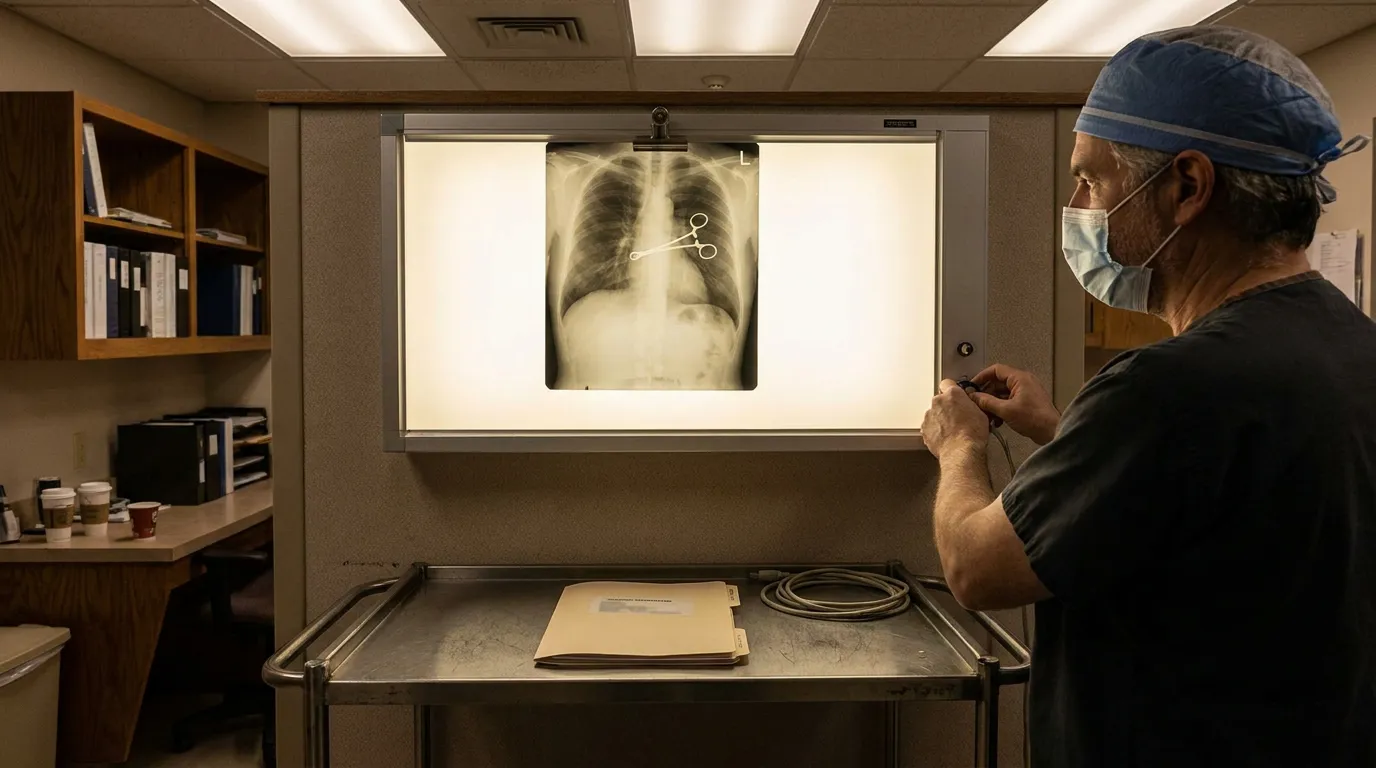
A retained surgical instrument malpractice claim arises when a surgical team leaves an item such as a sponge, clamp, needle, retractor, or guidewire inside a patient after closing the incision. In West Virginia, these claims generally fall under the Medical Professional Liability Act, W. Va. Code Chapter 55, Article 7B, which governs notice, expert, and deadline rules for malpractice cases filed in Morgantown or elsewhere in the state. Consequences can include sepsis, bowel perforation, chronic pain, additional corrective surgeries, and in some cases wrongful death. Because the item is often discovered months or years later, the discovery component of the limitations analysis is frequently more contested than in a typical surgical negligence case.
If you or a family member is living with the aftermath of an object left behind during surgery, Robinette Legal Group PLLC is prepared to review what happened. Call 304-501-5753 or reach out to our team today to discuss your situation with a West Virginia injury law firm that handles serious medical negligence matters.
Why West Virginia Law Treats Retained Objects Differently
Retained foreign objects are widely classified as "never events," meaning incidents that should not occur when reasonable safeguards are followed. Standard practice includes sponge and instrument counts before, during, and after a procedure, plus imaging when a count doesn’t reconcile. When a count fails and the patient is closed anyway, the resulting harm may support a claim for operating room negligence in West Virginia, though liability still depends on the facts and applicable standard of care. Note that "never event" is a patient-safety classification, not a legal standard, and doesn’t by itself establish negligence.
The governing definition matters because it can determine what kind of case you have. Under W. Va. Code § 55-7B-2, "medical professional liability" broadly covers damages from death or injury based on health care services rendered, or that should have been rendered, by a health care provider or facility. The same section defines "health care provider" broadly, which is why a claim may involve a surgeon, an assisting nurse, an anesthesia provider, or the hospital itself. The statute’s term "occurrence" matters later, since damage caps apply per-occurrence rather than per defendant.
Who May Be Accountable After an Instrument Is Left Inside a Patient
Depending on the evidence, potentially responsible parties in a Monongalia County surgical negligence case may include:
- The operating surgeon who closed the incision
- Circulating and scrub nurses responsible for instrument and sponge counts
- Surgical technologists and assistants involved in the procedure
- The hospital or surgical facility, through direct or vicarious liability theories
- Radiologists who may have failed to identify a visible object on post-operative imaging
Determining which parties belong in a case generally requires reviewing operative reports, count sheets, imaging, and staffing records. Not every provider present will be a proper defendant, and courts may evaluate each provider’s duty separately.
Filing Deadlines and the Discovery Rule
West Virginia generally requires a medical professional liability action against most providers within two years of the date of medical injury, or within two years of discovery (or when it reasonably should have been discovered), whichever is later. This period appears in W. Va. Code § 55-7B-4(a), which also establishes a ten-year statute of repose barring claims filed more than ten years after the injury. Different rules apply to certain defendants and claimants, including a shorter one-year period for nursing homes and assisted living facilities under § 55-7B-4(b), and special provisions for children injured before age ten. Reviewing the statute of limitations for malpractice actions is important early on, since repose can extinguish an otherwise valid claim.
Retained object cases depend on the discovery rule rather than a special foreign object statute. West Virginia’s MPLA has no separate statutory exception for objects negligently left in a patient. Instead, a patient who learns of a retained item years later relies on the discovery language in § 55-7B-4(a), which can push the start of the two-year period to when the injury was or should have been discovered. That relief has limits: courts have treated the ten-year repose period as a firm bar the discovery rule doesn’t overcome, and a defendant may argue the patient should have discovered the object earlier based on symptoms, imaging, or prior visits. Tolling arguments involving fraud or concealment may be available in narrow, fact-intensive circumstances.
| Timing Concept | General Rule in West Virginia | Practical Note |
|---|---|---|
| Statute of limitations | Generally two years from the injury or its discovery, whichever is later, under § 55-7B-4(a) | Fact-dependent; discovery date often disputed |
| Statute of repose | Generally ten years from the date of medical injury | Can bar claims regardless of discovery |
| Retained object timing | No separate statutory exception; discovery rule in § 55-7B-4(a) applies | Repose still applies; tolling arguments are narrow |
| Pre-suit notice | Generally at least 30 days before filing | Separate from the limitations period |
💡 Pro Tip: Write down the date you first learned an object was retained and keep every discharge summary, imaging report, and referral note. That documentation often becomes central evidence when the discovery date is disputed.
The Pre-Suit Requirements Behind a Retained Surgical Instrument Malpractice Claim
West Virginia generally does not allow a lawsuit to be filed the moment a patient decides to sue. Under W. Va. Code § 55-7B-6(b), at least thirty days before filing, the claimant must serve by certified mail, return receipt requested, a notice of claim on each health care provider they intend to sue. The notice of claim requirements generally apply to every provider named, and procedural missteps here can create serious complications for an otherwise strong case.
The notice must generally be accompanied by a screening certificate of merit. Section 55-7B-6(b) requires the certificate be executed under oath by a qualified expert health care provider, addressing the applicable standard of care, how it was breached, and how the breach caused the claimed injury. Obtaining a qualified reviewing physician takes time, so injured patients are generally encouraged not to wait until a deadline nears. Properly serving notice can trigger limited statutory tolling, but this is narrow and shouldn’t replace timely filing.
The Res Ipsa Loquitur Question in Retained Item Cases
A limited exception to the certificate requirement exists for certain claims. W. Va. Code § 55-7B-6(c) allows a claimant to proceed without a screening certificate where the claim is based on a well-established legal theory of liability not requiring expert testimony on breach, provided the notice of claim states that theory. The exception excuses the certificate, not the notice. Because a left instrument may be viewed as an event that ordinarily doesn’t occur absent negligence, res ipsa loquitur is frequently discussed in these matters. Whether it applies remains fact-dependent, and many attorneys still obtain expert review to address causation and damages even where breach seems evident.
Damages Available in a West Virginia Retained Object Case
The financial and human toll of a retained object is often severe. Patients commonly face emergency care, corrective surgery, extended hospitalization, infection treatment, physical therapy, and ongoing monitoring, all potentially recoverable as economic damages. Lost wages during recovery and diminished earning capacity for patients unable to return to physically demanding work may also be part of a claim.
Non-economic damages address what the numbers cannot capture: chronic pain, emotional distress, anxiety about future care, loss of enjoyment of daily activities, and strain on family relationships. However, W. Va. Code § 55-7B-8 caps non-economic damages at a base of $250,000 per occurrence, rising to $500,000 for wrongful death, permanent and substantial physical deformity, loss of use of a limb or organ system, or a permanent injury preventing independent self-care. These figures are adjusted annually for inflation up to 150 percent of the base amounts, so current numbers are higher than the base. Economic damages such as medical expenses and lost earnings are not subject to these caps.
Understanding Coverage Limits and Additional Sources of Recovery
Even a well-supported claim can be constrained by available insurance coverage. Physicians and hospitals typically carry professional liability policies with defined limits, and where multiple providers share responsibility, more than one policy may be implicated. Identifying every potentially liable party, including a hospital’s institutional coverage or a staffing entity’s separate policy, is often necessary when pursuing full value for a serious injury claim. Coverage can also matter to the caps themselves, since the statutory limits on non-economic damages are unavailable to a defendant lacking the minimum medical professional liability insurance specified by § 55-7B-8(d).
💡 Pro Tip: Request a complete copy of your medical records, including the operative note and nursing count sheet, before memories fade and staff turnover makes witnesses harder to locate.
Practical Steps After Learning an Object Was Left Behind
Prompt medical attention comes first. Follow-up care protects your health and creates contemporaneous documentation of the object’s presence, location, and removal. If surgically removed, ask that the object be preserved, as it can be meaningful evidence.
Standing to sue is a separate question that catches many families off guard. Whether an injured patient, guardian, or personal representative brings the action may affect how the case must be captioned and pursued, and reviewing who can file a malpractice lawsuit early can help prevent procedural problems. In wrongful death situations, additional statutory requirements apply, including that the action generally must be brought by the decedent’s personal representative under West Virginia’s wrongful death statute.
Legal guidance early in the process can help with meeting every procedural requirement. A retained surgical instrument malpractice claim lawyer can coordinate record collection, secure qualified physician review, and evaluate how the discovery rule and statute of repose apply to your timeline. Outcomes always depend on the specific facts, and no attorney can promise a particular result.
Frequently Asked Questions
1. How long do I have to file a retained surgical instrument malpractice claim in Morgantown?
Generally, W. Va. Code § 55-7B-4(a) provides two years from the date of medical injury or from when it was or reasonably should have been discovered, whichever is later, subject to a ten-year statute of repose from the injury date. West Virginia has no separate statutory foreign object exception, so a late-discovered claim depends on the discovery rule and any narrow tolling doctrine that may apply. The analysis is fact-specific, and different deadlines apply to some defendants and claimants.
2. Do I need a medical expert to bring a retained foreign object claim in WV?
In most cases, yes. W. Va. Code § 55-7B-6(b) requires a screening certificate of merit from a qualified health care provider, though § 55-7B-6(c) recognizes a limited exception for well-established liability theories not requiring standard-of-care testimony. Even then, a notice of claim stating that theory must still be served.
3. Can the hospital be held responsible, or only the surgeon?
Both may potentially be named. Since W. Va. Code § 55-7B-2 defines health care provider to include licensed or certified institutions, a hospital may face direct or vicarious liability depending on staffing arrangements and evidence.
4. What if I only have symptoms and no confirmed diagnosis yet?
Unexplained pain, recurring infection, swelling, or digestive problems after surgery may warrant prompt imaging. A confirmed finding can strengthen a case considerably, but you may still consult an attorney while diagnostic work is ongoing so deadlines are tracked.
5. Are non-economic damages limited in West Virginia malpractice cases?
Yes. Under W. Va. Code § 55-7B-8, non-economic damages are capped at a base of $250,000 per occurrence, with a base of $500,000 for defined catastrophic circumstances, both adjusted annually for inflation up to 150 percent of the base amounts. Economic damages such as medical bills and lost earnings are not capped.
Moving Forward After a Preventable Surgical Error
A retained surgical instrument malpractice claim in West Virginia sits at the intersection of difficult factual questions and demanding procedural rules. The two-year limitations period, the discovery rule, the ten-year repose provision, the pre-suit notice obligation, and the certificate of merit requirement each can affect whether a case moves forward. Patients who have endured additional surgeries, infections, and lasting pain deserve a careful evaluation of both the medicine and the statutory framework governing their claim.
If a surgical team left something behind and your life has changed as a result, Robinette Legal Group PLLC is ready to listen. Call 304-501-5753, request a case review now, or learn more about our West Virginia legal services to take the next step.
Disclaimer: This content is for informational purposes only and is not legal advice. Every case is unique, and results may vary. Consult an attorney about your specific circumstances.

Jeffery Robinette was admitted to practice law in 1991 and is licensed in all levels of state and federal trial courts in West Virginia. Mr. Robinette is also licensed in all state and federal appeals courts in West Virginia and the United States Supreme Court. As a National Board Certified Trial Attorney who has handled hundreds of motor vehicle, injury, and construction defect claims and a leading author on insurance claims settlement issues and difficulties in West Virginia, Jeff Robinette is uniquely qualified to represent your best interest.