
When a Split-Second Failure to Yield Changes a Rider’s Life
Key Takeaways: When a driver fails to yield to a West Virginia motorcyclist, that driver generally bears primary liability for the crash. West Virginia’s modified comparative fault system under §55-7-13a and §55-7-13c assigns percentages of responsibility to each party. A rider who was partly at fault can still recover unless their fault exceeds the combined fault of everyone else, with awards reduced proportionally. Because these crashes often cause catastrophic harm, injured riders may pursue medical costs, lost wages, pain and suffering, and long-term disability expenses. Riders generally have two years to file under §55-2-12(b), making prompt action essential.
A driver who fails to yield the right of way to a motorcyclist generally bears primary liability for the crash and resulting injuries. When a car turns across a rider’s path or pulls out from a stop sign, West Virginia law allocates responsibility by measuring each party’s share of fault. For a seriously injured motorcyclist facing surgeries, lost income, and a long recovery, understanding how fault is assigned is the first step toward securing fair compensation.
If you or a loved one suffered catastrophic injuries in a failure to yield motorcycle crash, the team at Robinette Legal Group PLLC is ready to help. Call 304-594-1800 or reach out through our contact page to discuss your case. Early guidance often makes the difference in preserving evidence and building a strong claim.

Why Failure-to-Yield Collisions Fall So Hard on Riders
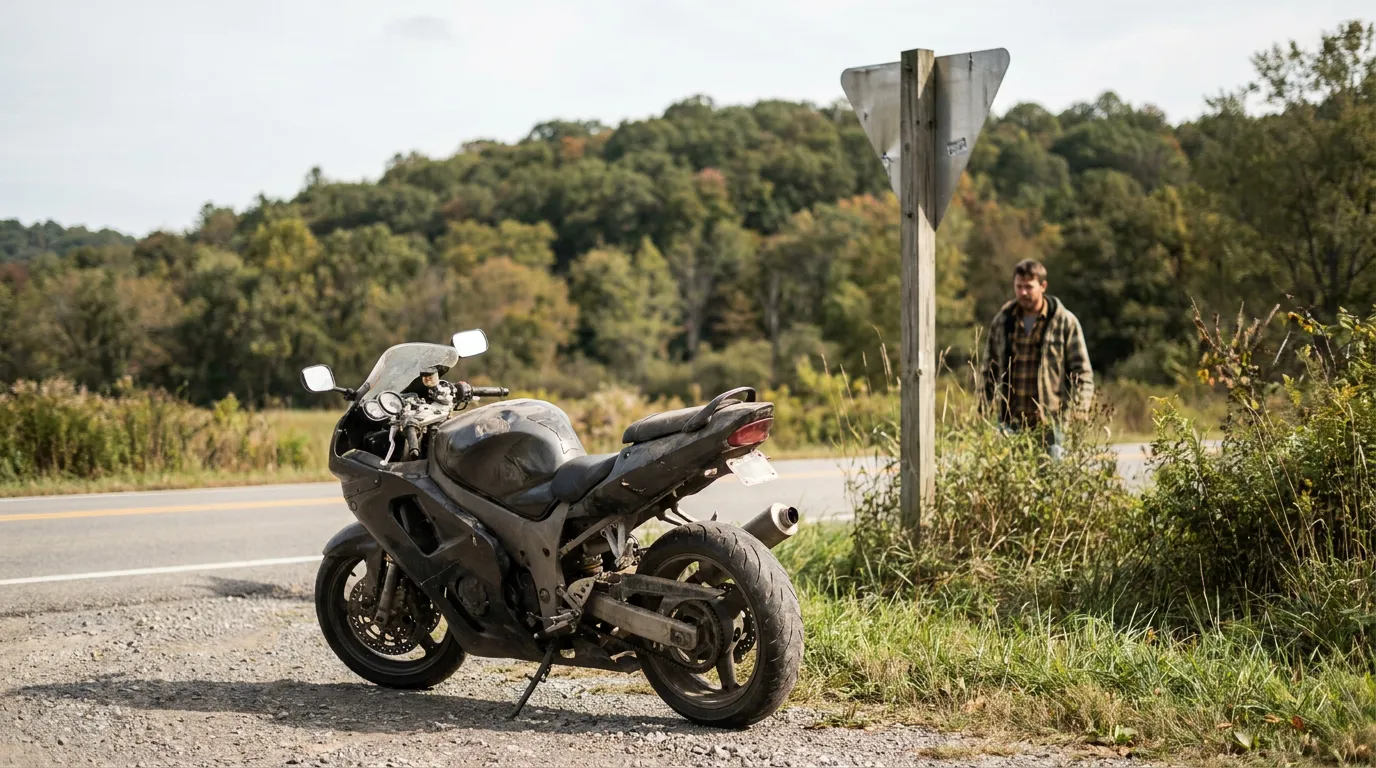
Failure to yield remains one of the most common and devastating causes of motorcycle injuries in West Virginia. Motorcycles are smaller and easier to overlook, so when a negligent driver misjudges a rider’s speed or simply doesn’t look, the rider absorbs the full impact. Unlike drivers protected by steel cages and airbags, motorcyclists have little between their body and the pavement.
These crashes frequently produce life-altering harm. Riders commonly suffer traumatic brain injuries, spinal cord damage, multiple fractures, and severe road rash requiring skin grafts. The medical journey often includes emergency care, major surgery, extended hospitalization, and months or years of rehabilitation.
💡 Pro Tip: Photograph the intersection, traffic controls, and vehicle positions if you are able, and ask any witnesses for contact information. Physical evidence at a failure-to-yield scene tends to disappear quickly once vehicles are moved.
How West Virginia Decides Who Is at Fault in Most Motorcycle Accidents
The question of who is at fault in most motorcycle accidents turns on West Virginia’s comparative fault framework, which assigns a percentage of responsibility to each person involved. The state follows a modified comparative fault standard set out in W. Va. Code §55-7-13a.
Fault is not treated as an all-or-nothing question. Instead, §55-7-13a(b) directs that recovery shall be allocated in direct proportion to each person’s percentage of fault. Under §55-7-13a(a), comparative fault means the degree to which a person’s fault was a proximate cause of injury, death, or property damage, expressed as a percentage.
The trier of fact must account for the full picture of responsibility. Section 55-7-13a(c) requires that total percentages of comparative fault equal either zero or one hundred percent, ensuring responsibility is fully apportioned. You can review the detailed language on the state’s page for the modified comparative fault standard.
Establishing the Driver’s Negligence
To hold a driver accountable, an injured rider must prove duty, breach, causation, and damages. A motorist has a duty to yield the right of way where required, and disregarding that duty by turning left or pulling out improperly breaches it. When that breach proximately causes the rider’s injuries, the driver’s percentage of fault typically rises accordingly. A classic example is the left-turn scenario, explored in our discussion of what happens when a driver turns left into a Morgantown rider.
When More Than One Party Shares Blame
Some crashes involve multiple contributors, and West Virginia uses several liability to sort out payment. Under §55-7-13c(a), each defendant’s liability for compensatory damages shall be several only and not joint, with each defendant liable only in direct proportion to their percentage of fault. A narrow exception exists for coordinated wrongdoing, where defendants consciously conspire and deliberately pursue a common plan, with a right of contribution among them.
💡 Pro Tip: If several vehicles were involved, do not assume only one policy applies. Each at-fault party’s percentage may open a separate source of compensation, subject to their coverage limits.
What Happens if the Motorcyclist Is Partly at Fault
Being assigned some fault does not automatically end a rider’s claim in West Virginia. The modified comparative fault rule allows recovery unless the injured rider carries more blame than everyone else combined. Specifically, §55-7-13c(c) provides that a plaintiff’s fault does not bar recovery unless the plaintiff’s fault is greater than the combined fault of all other persons responsible.
When a rider is partly responsible, the award is reduced rather than erased. If the plaintiff’s fault is less than the combined fault of others, recovery shall be reduced in proportion to the plaintiff’s degree of fault. The full statutory framework for several liability and reduced recovery explains how these calculations work. Because insurers often try to inflate a rider’s share of blame, careful advocacy matters.
A related protection exists when a liable party cannot pay. Section 55-7-13c(d) allows a plaintiff who cannot collect through good-faith efforts to move for reallocation of any uncollectible amount within one year after judgment becomes final.
The Full Scope of What an Injured Rider May Recover
Compensation in a serious motorcycle case reflects the true weight of a life-altering injury. An experienced legal team documents each category thoroughly so nothing is left uncounted.
- Medical expenses, including emergency treatment, surgery, hospitalization, physical therapy, and future ongoing care
- Lost wages and diminished earning capacity when injuries prevent a return to work
- Pain and suffering, emotional distress, and reduced quality of life
- Long-term or permanent disability costs, such as assistive devices and home modifications
Policy limits can quietly cap even a strong claim, which is why identifying every coverage source is critical. Even a clearly liable driver may carry only minimum insurance. In many cases, underinsured motorist coverage, umbrella policies, or third-party liability can supply additional compensation.
💡 Pro Tip: Request a copy of your own auto policy and look for underinsured motorist coverage before you settle. This coverage can become essential when the at-fault driver’s limits fall short of your medical costs.
Deadlines That Protect a Rider’s Right to Sue
West Virginia generally gives injured motorcyclists two years to file a personal injury lawsuit. The controlling deadline comes from W. Va. Code §55-2-12(b), which requires that a personal action for damages for personal injuries be brought within two years next after the right to bring the same shall have accrued. Section 55-2-12 is titled "Personal actions not otherwise provided for" and applies to every personal action for which no limitation is otherwise prescribed.
Property and injury claims are treated separately. Section 55-2-12(a) provides a two-year limit for property damage, separate from the personal-injury provision in subsection (b). Courts interpret exceptions narrowly, and they do not apply automatically. Because a missed deadline can extinguish an otherwise strong claim, riders should treat the two-year window as a firm boundary and act well before it closes.
| Type of Claim | Statute | General Deadline |
|---|---|---|
| Personal injury | §55-2-12(b) | Two years from accrual |
| Property damage | §55-2-12(a) | Two years |
Why Skilled Representation Shapes the Outcome
Insurance companies rarely volunteer the full value of a catastrophic motorcycle claim, and they often push blame onto the rider. Because West Virginia reduces recovery by a rider’s percentage of fault, every point of disputed blame carries real financial consequences. Building a persuasive account requires preserving evidence, consulting the right professionals, and countering insurer tactics with facts.
Robinette Legal Group PLLC brings an award-winning reputation and deep familiarity with West Virginia injury law to serious motorcycle cases. Learn more about how the firm approaches these matters on its page for riders seeking a West Virginia motorcycle accident attorney.
💡 Pro Tip: Avoid giving a recorded statement to the other driver’s insurer before speaking with counsel. Innocent remarks are frequently used to argue a higher percentage of rider fault.
Frequently Asked Questions
-
Who is at fault in most motorcycle accidents involving a failure to yield?
In failure-to-yield crashes, the driver who violated the rider’s right of way generally carries the majority of fault. West Virginia assigns a percentage to each party, and a motorist who turned across a rider’s path or pulled out improperly typically bears the larger share.
-
Can I still recover if I was speeding at the time?
You may still recover as long as your fault does not exceed the combined fault of everyone else responsible. Under §55-7-13c(c), your award would be reduced in proportion to your assigned percentage rather than eliminated.
-
How long do I have to file a claim in West Virginia?
You generally have two years from the date of the crash under §55-2-12(b). Certain narrow exceptions may affect that deadline, but courts apply them cautiously, so acting promptly is wise.
-
What if the at-fault driver does not have enough insurance?
Even a strong claim can be limited by the at-fault driver’s policy maximum. Underinsured motorist coverage or third-party liability can provide additional compensation, and identifying those sources early is important.
-
What damages can a seriously injured rider pursue?
A rider may pursue medical costs, lost income and future earning capacity, pain and suffering, and the lasting impact on daily life. The goal is to account for both current losses and long-term consequences.
Protecting Your Recovery After a Right-of-Way Crash
When a driver fails to yield to a motorcyclist in West Virginia, that driver generally bears the bulk of liability, and the state’s comparative fault system determines how responsibility and compensation are divided. A rider’s own conduct may reduce an award, but under §55-7-13a and §55-7-13c it rarely eliminates one entirely. With serious injuries, mounting medical bills, and insurers working to minimize payouts, understanding these rules is essential.
You do not have to navigate this process alone. Contact Robinette Legal Group PLLC through the firm’s West Virginia injury resource page, call 304-594-1800, or request a consultation online to discuss your options. Taking that first step early helps preserve evidence and safeguard your right to full and fair compensation.

Jeffery Robinette was admitted to practice law in 1991 and is licensed in all levels of state and federal trial courts in West Virginia. Mr. Robinette is also licensed in all state and federal appeals courts in West Virginia and the United States Supreme Court. As a National Board Certified Trial Attorney who has handled hundreds of motor vehicle, injury, and construction defect claims and a leading author on insurance claims settlement issues and difficulties in West Virginia, Jeff Robinette is uniquely qualified to represent your best interest.