

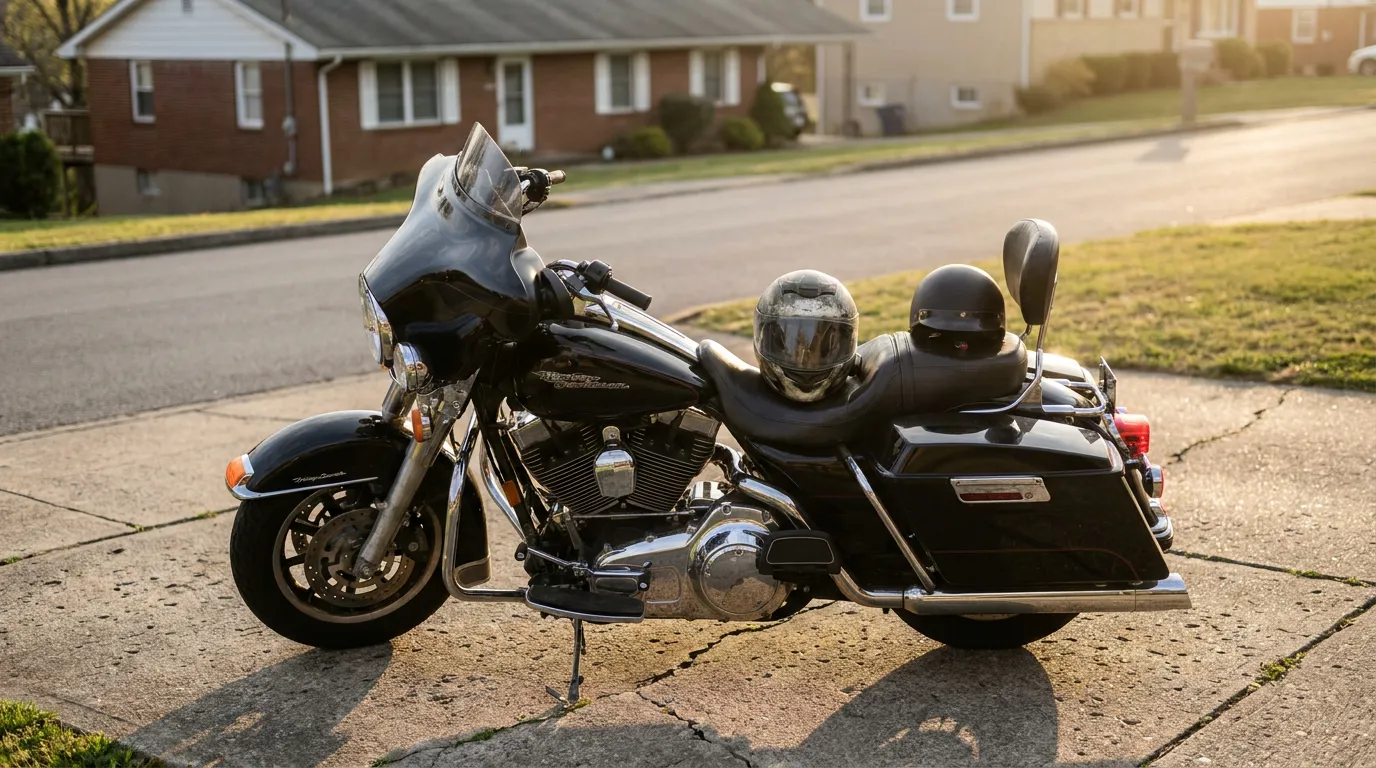
Understanding Financial Responsibility After a Passenger Is Hurt in a Morgantown Motorcycle Crash
Key Takeaways: When a motorcycle passenger is seriously hurt in Morgantown, payment usually comes from the liability insurance of whichever driver caused the crash, another motorist, the motorcycle operator, or both. West Virginia’s modified comparative fault system divides responsibility by percentage, and passengers are rarely assigned fault since they had no control over the bike. Other potentially liable parties can include employers, alcohol vendors in limited circumstances, government entities responsible for roadway conditions, and manufacturers of defective components. Because minimum liability limits are often too small for catastrophic injuries, recovery frequently depends on underinsured motorist coverage, household policies, employer or commercial policies, and MedPay or health insurance. Recoverable damages may span past and future medical care, diminished earning capacity, and non-economic harm such as pain, disfigurement, and loss of enjoyment of life. West Virginia generally allows two years to file most personal injury suits, so early evidence preservation, written notice to UM/UIM carriers, and caution with recorded statements can significantly affect the outcome.
When a motorcycle passenger suffers serious injuries, payment generally comes from the liability insurance of whichever driver caused the collision. West Virginia follows a modified comparative fault system, apportioning fault by percentage among responsible parties, subject to statutory exceptions allowing joint liability. Because passengers rarely contribute to causing a wreck, they are often in a strong position to recover, though the practical challenge is finding enough coverage for catastrophic medical care, lost earning capacity, and lifelong limitations.
If you or a family member is facing surgeries, rehabilitation, and mounting bills after a passenger injury, the team at Robinette Legal Group PLLC can review the available coverage and explain your options. Call 304-501-5753 or request a free consultation to discuss what happened and what may be recoverable in your situation.
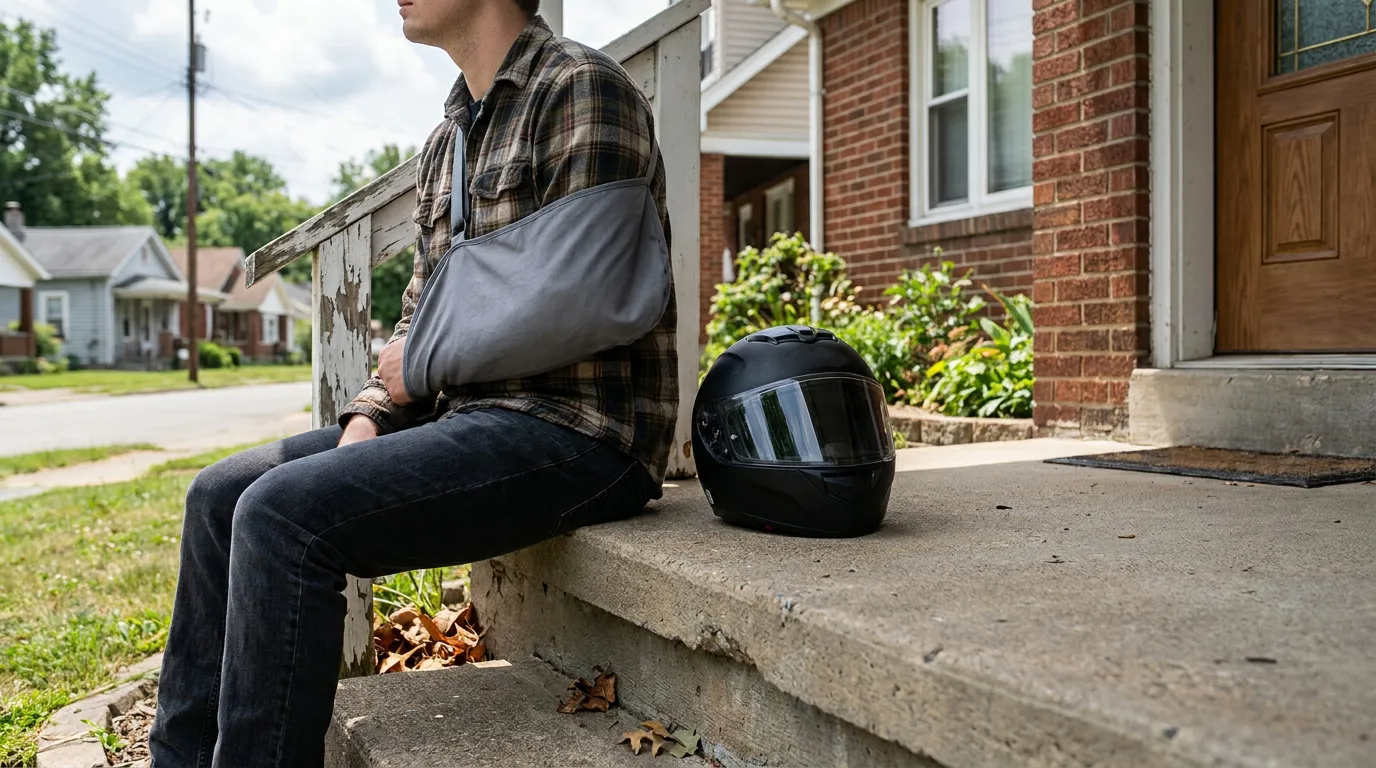
Why Passenger Claims Are Different From Rider Claims
Passengers occupy a legally distinct position because they had no control over speed, lane position, braking, or the decision to ride into a hazard. That absence of control matters when insurers attempt to shift blame, since defenses aimed at riders often don’t translate to someone seated behind the operator. In many Morgantown passenger injury cases, the contested question isn’t whether the passenger was careless, but which driver’s negligence caused the collision and how fault breaks down.
Passenger injuries tend to be severe because passengers have even fewer protective options than the operator. Riders can sometimes brace or steer away; passengers are often ejected without warning. Traumatic brain injuries, spinal fractures, degloving injuries, multiple orthopedic surgeries, and long rehabilitation stays are common, with financial consequences that follow families for years.
Identifying Every Liable Party in a Motorcycle Passenger Injury Claim in West Virginia
Determining who may pay begins with mapping every party whose conduct may have contributed to the crash. Liability generally turns on the traditional negligence elements: duty of care, breach, causation, and provable damages, whether the injured party is a rider or a passenger.
Potentially responsible parties may extend well beyond the obvious driver:
- The driver of another vehicle who turned left across the motorcycle’s path, changed lanes without looking, or was impaired
- The motorcycle operator, if negligent riding contributed to the collision
- A commercial employer, when the at-fault driver was working at the time
- A bar or party host in limited dram shop circumstances involving an impaired driver
- A government entity or contractor responsible for a dangerous roadway or work zone condition
- A manufacturer, where a defective component contributed to the crash or worsened the injuries
Claims against alcohol providers deserve particular caution: West Virginia has no broad dram shop statute, and liability generally arises, if at all, under common-law negligence tied to statutes prohibiting service to intoxicated or underage persons. Social host liability is narrower still. Claims against government entities are subject to immunities, damage caps, and notice provisions under West Virginia’s governmental tort claims framework, and claims against the State itself are typically routed through the Legislature’s claims process.
When multiple parties share blame, West Virginia generally allocates responsibility by percentage rather than treating liability as all-or-nothing. The statutory framework governing contribution among joint tortfeasors at W. Va. Code §55-7-13c makes liability several rather than joint in most cases, meaning each defendant ordinarily pays only its own percentage, while preserving joint liability in defined situations such as intoxicated driving or intentional acts. Related definitions in W. Va. Code §55-7-13b explain terms like "fault," "defendant," and "plaintiff," and W. Va. Code §55-7-8a addresses survival of injury claims after the death of the injured person or the wrongdoer.
💡 Pro Tip: Ask early whether the at-fault driver was on the clock. Employer vehicle policies and commercial umbrella coverage frequently dwarf personal auto limits, and identifying that connection early can change the entire financial picture of a claim.
How Comparative Fault Can Shape Who Pays a Motorcycle Passenger Claim
West Virginia’s modified comparative fault rules reduce a claimant’s recovery in proportion to that person’s own share of fault and bar recovery entirely when the claimant’s share exceeds the combined fault of all other parties. The general doctrine of comparative negligence may reduce damages according to how much the claimant’s own conduct contributed to the injury. For many passengers, this doctrine works in their favor, since there is often no meaningful argument that the passenger caused the crash.
Where Insurers Try to Assign Passenger Fault
Adjusters sometimes argue that a passenger accepted a known risk, declined a helmet, or knowingly rode with an impaired operator. Courts may consider such arguments, but outcomes are fact-dependent. Nothing about riding as a passenger automatically establishes fault; these defenses generally require proof that the passenger’s specific conduct contributed to causing the injuries claimed.
Why Fault Percentages Determine the Size of Each Insurer’s Payment
When two drivers share responsibility, each carrier is generally exposed only to its insured’s allocated percentage, unless a statutory exception makes liability joint. That often makes a passenger’s claim a multi-policy recovery rather than a single-payer claim. Coordinating those policies, and preventing one insurer from underpaying by inflating another party’s share, is a large part of plaintiff-side representation.
Where the Money Actually Comes From After a Serious Passenger Injury
Coverage, not liability, is frequently the limiting factor in a serious injury case. West Virginia’s financial responsibility law requires registered vehicles to carry liability insurance, with minimum limits for bodily injury and property damage, plus mandatory uninsured motorist coverage at comparable limits. Those minimums were never designed to cover a spinal cord injury, and a catastrophically injured passenger may exhaust an at-fault driver’s entire policy in a single hospital stay.
| Potential Source of Payment | When It May Apply |
|---|---|
| At-fault driver’s liability coverage | Primary source when another motorist caused the crash |
| Motorcycle operator’s liability policy | When the operator’s negligence contributed to the collision |
| Passenger’s own UM/UIM coverage | When at-fault coverage is absent or insufficient |
| Household resident UM/UIM policies | May apply depending on policy language and residency |
| Employer or commercial policy | When the at-fault driver was acting in the scope of employment |
| Health insurance and MedPay | Interim payment of medical bills; both MedPay and health insurance are generally subject to subrogation in West Virginia, subject to the ‘made whole’ doctrine, meaning an insured must be fully compensated for their injuries before an insurer’s subrogation rights arise, absent a valid contractual obligation to the contrary |
Underinsured motorist coverage can be the difference between a partial and a more complete recovery. Many passengers don’t realize their own auto policy may respond even though they weren’t in their own vehicle, though coverage depends on policy language, the definition of an insured, and whether UIM coverage was purchased, since it’s optional in West Virginia. Stacking and offset questions across household policies are governed by policy terms and case law, so a careful policy audit early on is often one of the highest-value steps in a claim like this.
💡 Pro Tip: Send written notice to every potentially applicable UM/UIM carrier promptly and obtain written consent before settling with the liability insurer. Settling first without consent can jeopardize underinsured motorist benefits under many policies.
The Full Range of Damages a Seriously Injured Passenger May Pursue
Compensation in these cases is meant to address the entire arc of harm, not just bills already received. Recoverable categories may include emergency transport, surgical costs, hospitalization, therapy, assistive devices, home modifications, and projected future treatment. Life care planning and vocational analysis are frequently used to document what long-term care may realistically require.
Economic losses may extend beyond medical expenses to earnings the injury takes away. A passenger who cannot return to physical work may face permanently diminished earning capacity that compounds across a working lifetime. Non-economic damages may address pain, emotional distress, loss of enjoyment of life, and disfigurement, while a spouse may in appropriate cases assert a separate loss of consortium claim.
Documentation often drives valuation. Consistent medical treatment, contemporaneous records, employment and wage evidence, and credible testimony about daily limitations can all influence what an insurer or jury ultimately considers reasonable.
Deadlines That Can End a Claim Before It Begins
West Virginia generally imposes a two-year deadline for filing most personal injury lawsuits. Under the statute of limitations codified at W. Va. Code §55-2-12, a personal action for injury to the person must generally be brought within two years after the right to sue accrued. Missing that window ordinarily forecloses the right to sue regardless of how strong the liability evidence may be, and contractual UM/UIM claims may carry different limitations periods and policy conditions.
Exceptions Exist, but Courts Read Them Narrowly
Doctrines such as the discovery rule, minority tolling, and fraudulent concealment may extend a deadline in limited circumstances, but none applies automatically. Courts generally interpret these exceptions strictly, and the burden falls on the claimant to establish that one applies. Claims involving governmental entities may also carry separate notice requirements and shorter or specialized filing procedures, so those situations warrant prompt review.
Practical Steps That Protect a WV Motorcycle Passenger Claim
Evidence in motorcycle cases can degrade quickly, and early preservation often affects what can be proven later. Vehicles get repaired or salvaged, roadway conditions change, surveillance video overwrites, and witness recollections fade within weeks. Requesting preservation of the involved vehicles, obtaining the crash report, photographing injuries over time, and identifying nearby commercial cameras are meaningful early actions.
Passengers often hesitate to file a claim when the operator is a friend or family member. In practice, the claim is generally directed at an insurance policy rather than a person’s personal assets, which is largely why that coverage exists, although a judgment exceeding available limits can in some situations reach the individual. Similar dynamics arise for car occupants, and the analysis of whether passengers can sue a negligent driver follows comparable principles.
Recorded statements requested by an adjuster in the first days after a crash rarely help an injured claimant. Injuries are still evolving, medication may affect recall, and casual phrasing can later be recharacterized as an admission. Cooperation duties owed to your own insurer differ from any obligation to a liability carrier, so pausing to consult a Morgantown passenger injury lawyer before giving a statement is often prudent.
Frequently Asked Questions
1. Can I file a claim if my friend was driving the motorcycle?
Often, yes. A passenger may generally pursue a claim against any negligent party, including the operator, and the claim is ordinarily handled by the operator’s liability insurer up to available limits rather than paid personally. Outcomes depend on the specific facts and available coverage.
2. What happens if the at-fault driver’s policy is too small for my injuries?
When liability limits are exhausted, attention generally shifts to other sources such as underinsured motorist coverage, household policies, employer coverage, or a third-party defendant. Identifying every applicable policy early, and complying with notice and consent-to-settle conditions, is often critical in high-value cases.
3. Does not wearing a helmet reduce what I can recover?
West Virginia law requires helmets for motorcycle operators and passengers, and insurers may raise non-use as an issue. Whether this affects a claim is fact-dependent and tied to the nature of the injuries alleged, but it does not automatically eliminate a passenger’s ability to seek recovery.
4. How long do I have to bring a passenger injury claim in West Virginia?
The general deadline for personal injury suits is typically two years from the date the cause of action accrued. Limited exceptions may apply in narrow circumstances, insurance claims can carry their own contractual deadlines, and claims involving public entities can involve separate notice obligations.
5. What if the person who hit us was drunk?
Impaired driving evidence may strengthen the liability picture, can affect how liability is apportioned among defendants, and may support a claim for punitive damages where the statutory standard is met. Criminal proceedings against the driver are separate from a civil claim for compensation.
Moving Forward After a Life-Altering Passenger Injury
Payment after a serious passenger crash rarely comes from a single tidy source. It generally requires establishing negligence, allocating fault percentages under West Virginia’s comparative fault statutes, and assembling every layer of available insurance to address medical costs, lost earning capacity, and human loss. Because coverage limits, fault allocation, and filing deadlines all interact, the strength of a motorcycle passenger injury claim in West Virginia can often depend on decisions made in the first weeks after the crash. A firm with extensive experience handling motorcycle passenger injury claim west virginia lawyer matters can evaluate those variables while your family focuses on recovery.
If a serious motorcycle passenger injury has upended your life, the attorneys at Robinette Legal Group PLLC are ready to listen and explain how West Virginia law may apply to your circumstances. Call 304-501-5753 or reach out to our team today to get answers about your rights and the compensation that may be available.
Disclaimer: This content is for informational purposes only and is not legal advice. Every case is unique, and results may vary. Consult an attorney about your specific circumstances.

Jeffery Robinette was admitted to practice law in 1991 and is licensed in all levels of state and federal trial courts in West Virginia. Mr. Robinette is also licensed in all state and federal appeals courts in West Virginia and the United States Supreme Court. As a National Board Certified Trial Attorney who has handled hundreds of motor vehicle, injury, and construction defect claims and a leading author on insurance claims settlement issues and difficulties in West Virginia, Jeff Robinette is uniquely qualified to represent your best interest.